Home / Network Switches / 24 Port (315)
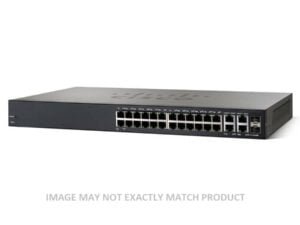
JL818A HPE Aruba CX 4100i 24 Ports Cl4 6 Poe 4sfp+ L3 Switch
£928.57£1,114.28 Incl. VAT
## Product Overview Of HPE JL818A #### Key Features ? Type: Managed 3 Layer Switch ? Port Configuration: 24 Ports ? Form Factor: Rack-Mountable ### Detailed Product Description #### HPE Aruba 4100i Switch Specifications ? Device Type: 24-Port Managed Switch ? Layer Support: Layer 3 (L3) ? Network Interface: Gigabit Ethernet ### Port and Power Over Ethernet (PoE) Details #### Comprehensive Port Breakdown ? 20 x 10/100/1000 Mbps Ports (PoE Class 4) ? 4 x 10/100/1000 Mbps Ports (PoE Class 6) ? 4 x SFP+ Ports for High-Speed Connectivity ### Expansion and Connectivity Options #### Interface Capabilities ? 20 x 1000Base-T RJ-45 (PoE Class 4) ? 4 x 1000Base-T RJ-45 (PoE Class 6) ? 4 x SFP+ Ports for Enhanced Flexibility HPE Aruba CX 4100i 24 Ports Cl4 6 Poe 4sfp+ L3 Managed Rack-mountable Switch - JL818A ## Number Of Ports The HPE Aruba CX 4100i Switch is equipped with an impressive number of 24 ports. This abundance of ports is a significant advantage for users as it allows for seamless connectivity and efficient network management. In this section, we will explore the benefits and importance of this feature in detail. ### Increased Flexibility and Scalability Having 24 ports on the HPE Aruba CX 4100i Switch provides users with increased flexibility and scalability options. With a larger number of ports available, businesses can easily accommodate their growing network needs without having to invest in additional switches or complicated configurations. This scalability allows for future-proofing the network infrastructure, ensuring that it can adapt to evolving requirements. #### Enhanced Connectivity Options The 24 ports on this switch enable users to connect a wide range of devices simultaneously. Whether it's computers, printers, servers, or other network devices, the ample number of ports ensures that all devices can be connected without any constraints. This enhances productivity by eliminating the need for additional switches or complex cabling setups. #### Simplified Network Management A higher number of ports simplifies network management by reducing the complexity associated with connecting multiple devices. With 24 ports, administrators can easily organize and manage their network infrastructure, making it easier to troubleshoot issues, monitor traffic, and allocate resources effectively. This streamlined management process saves time and effort for IT teams while ensuring optimal network performance. #### Improved Performance and Bandwidth The 24 ports on the HPE Aruba CX 4100i Switch provide users with improved performance and bandwidth capabilities. Each port supports high-speed data transfer rates, allowing for fast and reliable connectivity. This is particularly beneficial for bandwidth-intensive applications such as video streaming, VoIP, and data-intensive tasks. ##### Optimized Workflows and Collaboration The increased number of ports allows businesses to optimize workflows and enhance collaboration among team members. With 24 ports, multiple users can connect their devices to the network simultaneously, enabling seamless data sharing, file transfers, and real-time collaboration. This promotes productivity and efficiency across the organization, facilitating smooth communication and teamwork. ##### Future-Proof Investment Investing in a switch with 24 ports, such as the HPE Aruba CX 4100i, ensures that businesses are prepared for future growth and expansion. With technology advancements and increasing network demands, having more ports provides the flexibility to accommodate new devices and services without the need for immediate upgrades. This future-proofing approach saves costs in the long run and eliminates disruptions caused by network limitations. ## Power Over Ethernet The HPE Aruba CX 4100i Switch features Power over Ethernet (PoE) capabilities, providing users with enhanced convenience and flexibility when it comes to powering network devices. In this section, we will delve into the benefits and importance of this feature. ### Simplified Network Deployment With PoE support, the HPE Aruba CX 4100i Switch eliminates the need for separate power sources for individual network devices such as IP phones, wireless access points, and security cameras. This simplifies network deployment by reducing cable clutter and power supply requirements. By utilizing the existing Ethernet infrastructure to deliver power, businesses can save time, effort, and costs associated with traditional power cabling. #### Flexible Device Placement The PoE feature enables flexible device placement within the network infrastructure. Since PoE eliminates the dependency on power outlets, users have the freedom to position their devices in optimal locations without being limited by power availability. This flexibility is particularly beneficial in scenarios where devices need to be installed in remote or hard-to-reach areas, improving overall network coverage and performance. #### Cost Savings Implementing PoE with the HPE Aruba CX 4100i Switch can result in significant cost savings. By utilizing a single network cable for both power and data transmission, businesses can reduce the amount of cabling required, resulting in lower installation and maintenance costs. Additionally, PoE eliminates the need for dedicated electrical circuits, further reducing infrastructure costs. #### Centralized Power Management The PoE feature on the HPE Aruba CX 4100i Switch allows for centralized power management. Administrators can monitor and control power allocation to individual devices, ensuring optimal resource utilization and preventing power wastage. This centralized management simplifies network maintenance by providing a unified interface to control power settings, troubleshoot issues, and perform remote power cycling. ##### Improved Reliability and Redundancy By utilizing PoE, businesses can enhance the reliability and redundancy of their network infrastructure. In case of power outages or failures, PoE switches can be connected to uninterruptible power supplies (UPS) to ensure continuous operation of critical devices. This redundancy reduces downtime and ensures uninterrupted service availability, especially for essential applications such as security systems or VoIP. ##### Support for IoT Devices The PoE feature is particularly advantageous for IoT (Internet of Things) implementations. As IoT devices continue to proliferate across industries, having a PoE-enabled switch like the HPE Aruba CX 4100i becomes crucial. PoE simplifies the deployment of IoT devices by providing both data connectivity and power through a single cable, facilitating seamless integration and management of IoT ecosystems. ## Number Of SFP Ports The HPE Aruba CX 4100i Switch is equipped with 4 SFP (Small Form-factor Pluggable) ports. These SFP ports offer users a range of benefits and importance in terms of network connectivity and flexibility. Let's delve deeper into this feature. ### High-Speed Fiber Connectivity The 4 SFP ports on the HPE Aruba CX 4100i Switch provide high-speed fiber connectivity options. SFP ports support various types of fiber optic cables, allowing for extended reach and increased data transfer rates compared to traditional copper connections. This is particularly advantageous in scenarios where long-distance connections or high-bandwidth requirements are essential, such as connecting remote offices or data centers. #### Flexible Network Design The inclusion of SFP ports offers users greater flexibility when designing their network infrastructure. These ports enable the use of different types of SFP transceivers, including Single-mode and Multi-mode, to accommodate specific network requirements. Whether it's connecting to different types of fiber optic cables or integrating with other network equipment, the SFP ports allow for versatile network design and seamless integration. #### Scalability and Future-Proofing The 4 SFP ports contribute to the scalability and future-proofing capabilities of the HPE Aruba CX 4100i Switch. These ports can be utilized to connect additional switches, routers, or devices, allowing for seamless expansion and growth of the network infrastructure. The ability to add or replace SFP modules provides businesses with flexibility and adaptability to meet evolving network demands. #### Improved Network Performance SFP ports offer improved network performance by leveraging fiber optic technology. Fiber connections are immune to electromagnetic interference, ensuring reliable data transmission and minimizing latency. This is crucial for bandwidth-intensive applications, data center interconnectivity, or any environment where low-latency and high-performance networking are critical. ##### Enhanced Security and Reliability The use of fiber optic cables through SFP ports enhances network security and reliability. Fiber connections are difficult to tap or intercept, making them more secure compared to traditional copper connections. Additionally, fiber cables are resistant to environmental factors such as electromagnetic interference and signal degradation over long distances, ensuring reliable and stable network connectivity. ##### Optimal Distance Coverage SFP ports provide optimal distance coverage for network connections. Fiber optic cables can transmit data over much longer distances without experiencing significant signal degradation compared to copper cables. This makes SFP ports ideal for connecting devices in geographically dispersed locations or environments where long-distance connectivity is required. ## Layer The HPE Aruba CX 4100i Switch operates at Layer 3 of the OSI (Open Systems Interconnection) model. The Layer 3 capability offers users several benefits and importance in terms of network performance, routing, and security. Let's explore this feature in more detail. ### Advanced Routing Functionality Operating at Layer 3 enables the HPE Aruba CX 4100i Switch to perform advanced routing functions. Layer 3 switches can make intelligent decisions based on IP addresses, allowing them to route traffic between different networks or subnets efficiently. This routing functionality is essential for businesses that require complex network segmentation or interconnectivity between multiple locations. #### Improved Network Performance Layer 3 switches offer improved network performance compared to Layer 2 switches. By performing routing functions, Layer 3 switches can make intelligent decisions about data forwarding based on IP addressing information. This reduces unnecessary broadcast traffic and optimizes network bandwidth utilization, resulting in enhanced overall network performance. #### Enhanced Network Security Layer 3 switches enhance network security by providing access control capabilities at the IP address level. These switches can implement access control lists (ACLs) to filter and control traffic based on specific IP addresses or address ranges. This granular control helps prevent unauthorized access, protect sensitive data, and mitigate potential security threats. #### Scalability and Flexibility Operating at Layer 3 allows for greater scalability and flexibility in network design. Layer 3 switches can support larger networks with multiple subnets, enabling efficient management of network resources and accommodating future growth. Additionally, Layer 3 switches can implement advanced protocols such as OSPF (Open Shortest Path First) or BGP (Border Gateway Protocol), which are crucial for large-scale networks or complex routing requirements. ##### Improved Inter-VLAN Communication Layer 3 switches facilitate improved inter-VLAN communication. VLANs (Virtual Local Area Networks) divide a physical network into multiple logical networks, providing enhanced security and network segmentation. Layer 3 switches can route traffic between different VLANs, allowing for seamless communication and data exchange while maintaining network isolation and security. ##### Support for Quality of Service (QoS) Layer 3 switches support Quality of Service (QoS) features, enabling prioritization of network traffic based on specific requirements. QoS ensures that critical applications or services receive sufficient bandwidth and latency requirements, optimizing their performance. This is crucial for environments where real-time communication, video streaming, or voice applications need to take precedence over less time-sensitive traffic. ## Part Number The HPE Aruba CX 4100i Switch has a unique part number - JL818A. This part number serves as an identification code for the specific switch model and plays a vital role in ordering, support, and compatibility. Let's explore the benefits and importance of this feature in more detail. ### Precise Ordering and Compatibility The part number JL818A ensures precise ordering and compatibility with the HPE Aruba CX 4100i Switch model. When purchasing network equipment or replacement parts, having the correct part number guarantees that you receive the intended product, avoiding any potential compatibility issues or incorrect shipments. This simplifies the procurement process and ensures the smooth integration of the switch into your existing network infrastructure. #### Efficient Technical Support and Documentation The part number is essential for efficient technical support and access to relevant documentation. When seeking assistance or troubleshooting guidance, providing the part number JL818A allows support teams to quickly identify your specific switch model and provide accurate solutions. Additionally, the part number serves as a reference for accessing product manuals, firmware updates, and other valuable resources related to the HPE Aruba CX 4100i Switch. #### Easy Identification and Asset Management The unique part number JL818A allows for easy identification and asset management of the HPE Aruba CX 4100i Switch. By associating the part number with the switch, businesses can keep track of their network assets accurately. This helps in inventory management, maintenance planning, and tracking warranty information, ensuring efficient lifecycle management of network equipment. #### Future Compatibility and Upgrades The part number serves as a reference point for future compatibility and upgrades. As new switch models or enhancements become available, having the correct part number facilitates accurate identification of compatible components or upgrade options. This enables businesses to leverage advancements in technology without the risk of purchasing incompatible or outdated equipment. ##### Seamless Integration with Existing Infrastructure The part number JL818A ensures seamless integration with your existing network infrastructure. By matching the part number with your current equipment, you can be confident that the HPE Aruba CX 4100i Switch will fit seamlessly into your network architecture, minimizing disruptions during installation or upgrades. This compatibility ensures a smooth transition and preserves existing investments in networking infrastructure.JL818A#ABA HPE Aruba CX 4100i 24P CL4 6 PoE 4SFP+ L3 Gigabit Ethernet Switch
£928.57£1,114.28 Incl. VAT
## Product Overview of HPE JL818A#ABA ### Manufacturer Details ? Brand: HPE ### Product Identification ? Part Number: JL818A#ABA ## Switch Specifications ### Port Configuration ? 24-Port Switch for robust connectivity ### Expansion and Connectivity Options #### Network Interfaces ? 20 x 1000Base-T RJ-45 PoE Class 4 Ports ? 4 x 1000Base-T RJ-45 PoE Class 6 Ports ? 4 x SFP Ports for fiber connections ## Technical Capabilities ### Power Over Ethernet (PoE) Support ? This switch provides advanced PoE functionality, enabling devices to receive both power and data through the same Ethernet cable, streamlining installation and reducing clutter. ### Performance Features ? Reliable connectivity with enhanced throughput ? Scalability for expanding network requirements ## Compatibility and Applications ### Ideal Usage Scenarios This switch is perfect for: ? Small to medium-sized businesses ? Data centers needing high-density connectivity ? Network environments requiring high availability ### Supported Devices Compatible with a range of network devices including: ? IP Cameras ? VoIP Phones ? Wireless Access Points HPE Aruba CX 4100i 24 Ports Cl4 6 Poe 4sfp+ L3 Gigabit Ethernet Rack-mountable Switch (JL818A#ABA) ## Ports The HPE Aruba CX 4100i 24P CL4 L3 Gigabit Ethernet Switch is equipped with 24 ports, making it an ideal choice for businesses that require a high level of connectivity. These ports provide users with the ability to connect multiple devices to the switch, enabling seamless communication and data transfer. ### Increased Connectivity With 24 ports, this switch offers a significant increase in connectivity options compared to switches with fewer ports. This allows businesses to connect a larger number of devices directly to the switch without the need for additional networking equipment. Whether it's computers, printers, servers, or other network devices, the HPE Aruba CX 4100i 24P CL4 L3 Gigabit Ethernet Switch can handle it all. #### Efficient Data Transfer The abundance of ports enables efficient data transfer between connected devices. Users can enjoy faster data transmission rates, allowing for quicker access to shared resources and improved productivity. This is particularly beneficial in environments where large files or multimedia content needs to be transferred between devices regularly. #### Scalability The 24 ports on this switch provide scalability for growing businesses. As your organization expands and the demand for network connections increases, you can easily accommodate new devices without the need for additional switches or complicated network configurations. This scalability ensures that your network remains flexible and adaptable to meet future requirements. ##### Network Segmentation Having 24 ports allows for effective network segmentation. With separate segments or VLANs, you can isolate different departments or groups within your organization, ensuring that sensitive data remains secure and improving overall network performance. This level of segmentation also enhances network management and troubleshooting capabilities. ##### Redundancy and Failover The multiple ports on the HPE Aruba CX 4100i 24P CL4 L3 Gigabit Ethernet Switch provide redundancy and failover options, ensuring uninterrupted network connectivity. By connecting devices to different ports, you can create redundant paths, minimizing the impact of a single port or link failure. This redundancy is crucial for businesses that rely heavily on network availability for their day-to-day operations. ## PoE The HPE Aruba CX 4100i 24P CL4 L3 Gigabit Ethernet Switch features Power over Ethernet (PoE) capability, with support for up to 6 PoE ports. This feature provides significant benefits to users, particularly in scenarios where powering network devices becomes a challenge. ### Powering Network Devices With PoE functionality, the switch can power compatible network devices directly through the Ethernet cables, eliminating the need for separate power sources or adapters. This simplifies the installation process and reduces cable clutter, making it an ideal choice for environments where power outlets may be limited or difficult to access. #### Flexibility and Convenience The availability of PoE ports on this switch offers flexibility and convenience in network deployments. Users can easily connect and power IP phones, wireless access points, security cameras, and other PoE-enabled devices without the need for additional power infrastructure. This streamlines the setup process and reduces the overall cost of deploying these devices. #### Remote Power Management The HPE Aruba CX 4100i 24P CL4 L3 Gigabit Ethernet Switch allows for remote power management of PoE devices. Administrators can monitor and control the power usage of connected devices, enabling efficient energy management and reducing operational costs. This feature is particularly useful in environments where devices may need to be powered down during non-working hours or when not in use. ##### Improved Reliability By providing power over the Ethernet cables, PoE eliminates the reliance on separate power sources, reducing the risk of power failures or interruptions. This improves the overall reliability of the network and ensures continuous operation of critical devices, such as security cameras or access points, even during power outages. ##### Future-Proofing Investing in a switch with PoE capabilities, such as the HPE Aruba CX 4100i 24P CL4 L3 Gigabit Ethernet Switch, future-proofs your network infrastructure. As the demand for PoE devices continues to grow, having PoE-enabled ports ensures that your network can support these devices without requiring additional upgrades or investments. ## SFP+ The HPE Aruba CX 4100i 24P CL4 L3 Gigabit Ethernet Switch offers 4 SFP+ (Small Form-Factor Pluggable Plus) ports, providing users with enhanced connectivity options and performance benefits. ### High-Speed Connectivity The SFP+ ports on this switch support high-speed data transfer rates, allowing for faster and more efficient communication between network devices. This is particularly advantageous in scenarios where bandwidth-intensive applications or large data transfers are common. #### Optical Fiber Connectivity SFP+ ports enable the use of optical fiber cables for network connections. Fiber optic cables offer greater bandwidth and longer transmission distances compared to traditional copper cables. By utilizing SFP+ ports, businesses can extend their network reach and ensure reliable connectivity even over long distances, making it suitable for larger office spaces or multi-floor buildings. #### Aggregation and Link Aggregation The presence of SFP+ ports enables aggregation and link aggregation capabilities. Aggregation allows multiple ports to be combined into a single logical connection, increasing overall bandwidth and improving network performance. This is particularly useful in environments that require high bandwidth and low latency, such as data centers or multimedia production facilities. ##### Network Flexibility The availability of SFP+ ports provides network administrators with the flexibility to choose between copper or fiber optic connections depending on their requirements. This versatility allows for easy integration into existing network infrastructure and the ability to connect to a wide range of devices. ##### Future-Proofing Investing in a switch with SFP+ ports, like the HPE Aruba CX 4100i 24P CL4 L3 Gigabit Ethernet Switch, future-proofs your network. As network technology continues to evolve, having SFP+ ports ensures that your switch can support higher data rates and advanced networking technologies without the need for a complete hardware replacement. ## SKU The HPE Aruba CX 4100i 24P CL4 L3 Gigabit Ethernet Switch is identified by the SKU JL818A#ABA. This unique identifier plays a crucial role in simplifying inventory management and ensuring compatibility with other network devices. ### Inventory Management Using a SKU simplifies inventory management by providing a standardized and unique identifier for the switch. Administrators can easily track and organize switches within their network infrastructure, ensuring efficient asset management and troubleshooting. #### Compatibility The SKU JL818A#ABA ensures compatibility with other HPE Aruba network devices. It signifies that the switch is part of the Aruba product line, allowing for seamless integration with other Aruba switches, routers, and access points. This compatibility facilitates simplified network deployment and ensures optimal performance across the entire Aruba ecosystem. #### Warranty and Support The SKU serves as a reference point for warranty and support services. By providing the SKU JL818A#ABA when seeking assistance, users can ensure they receive accurate and timely support from HPE Aruba's customer service team. This simplifies the troubleshooting process and reduces downtime in case of any issues. ##### Product Differentiation HPE Aruba differentiates its products through SKUs, allowing users to identify specific features or variations within a product line. The SKU JL818A#ABA indicates the specific model with 24 ports, PoE support, and SFP+ capabilities. This level of product differentiation enables users to select the exact switch model that aligns with their specific requirements and eliminates any confusion during the purchasing process. ##### Easy Ordering and Procurement The SKU simplifies the ordering and procurement process for the HPE Aruba CX 4100i 24P CL4 L3 Gigabit Ethernet Switch. By providing the SKU JL818A#ABA to vendors or resellers, users can ensure they receive the correct switch model, reducing the risk of ordering mistakes or compatibility issues. This streamlines the procurement process and ensures a smooth transition from ordering to deployment. In conclusion, the HPE Aruba CX 4100i 24P CL4 L3 Gigabit Ethernet Switch offers significant benefits through its 24 ports, PoE support for up to 6 devices, 4 SFP+ ports, and unique SKU JL818A#ABA. These features enhance connectivity, scalability, and flexibility while simplifying network management and future-proofing your network infrastructure. Whether you need to connect multiple devices, power network devices conveniently, achieve high-speed connectivity, or ensure compatibility and easy inventory management, this switch delivers on all fronts.JL818-61001 HPE 24-Port 3-Layer Modular Managed Rack-mountable Switches
£928.57£1,114.28 Incl. VAT
## Technical Overview and Specifications ### Product Details ? Brand: HPE ? Model Number: JL818-61001 ? Device Type: 24-Port Network Switch ### Key Features ? Comprehensive support for Power over Ethernet (PoE), ensuring efficient energy management. ? Reliable Gigabit Ethernet capabilities for seamless and high-speed connectivity. ? Scalable design suitable for various networking environments. ## Connectivity and Expansion Capabilities ### Interface Configuration ? 20 Gigabit Ethernet ports with RJ-45 connectors, supporting PoE Class 4 for powering compatible devices. ? 4 Gigabit Ethernet RJ-45 ports with advanced PoE Class 6 functionality for higher power output. ? 4 high-speed SFP+ slots for fiber optic connections, ensuring flexible network expansion. ### Scalable Networking Options ? Seamless integration of both wired and fiber connections. ? Designed for growing networks with increased data demands. ## Performance and Efficiency ### Power Over Ethernet (PoE) Support ? Enhanced PoE standards for powering devices like IP phones, cameras, and access points. ? Supports diverse deployment scenarios with Class 4 and Class 6 PoE options. ### High-Speed Connectivity ? Gigabit Ethernet ensures minimal latency and smooth data transfer. ? SFP+ interfaces provide additional bandwidth for demanding applications. #### Energy Efficiency ? Optimized power usage for sustainable network operations. ? Smart energy management to reduce overall consumption. ## Applications and Use Cases ### Ideal for Modern Businesses ? Suited for small to medium-sized enterprises needing a robust networking solution. ? Perfect for high-performance environments requiring versatile connectivity options. ### Versatile Deployment Scenarios ? Supports diverse settings, including offices, educational institutions, and retail environments. ? Enables reliable connections for various devices, from workstations to surveillance cameras. ## Product Overview The HPE JL818-61001 24-Port 3-Layer Modular Managed Rack-mountable Switches are a game-changer in the networking industry. Designed for high performance and reliability, these switches offer advanced features to meet the demanding needs of modern data centers. With 24 ports and a modular design, this switch provides flexibility and scalability for growing networks. ### Key Features #### 1. High Performance The HPE JL818-61001 switch delivers exceptional performance with a switching capacity of up to 480 Gbps. It supports wire-speed switching on all ports, ensuring fast and efficient data transfer throughout the network. This high-performance switch can handle heavy workloads and bandwidth-intensive applications without compromising on speed. #### 2. Advanced Layer 3 Features This switch provides advanced Layer 3 features, including dynamic routing protocols such as OSPF and BGP. It supports VLAN routing, allowing for secure and efficient communication between different VLANs. With its Layer 3 capabilities, this switch enables efficient traffic management and improves network performance. #### 3. Modular Design The modular design of the HPE JL818-61001 switch offers flexibility and scalability. It allows you to add or replace modules as your network requirements change, ensuring future-proofing and cost-effectiveness. With hot-swappable modules, you can easily upgrade or expand your network without disrupting operations. #### 4. Enhanced Security Security is a top priority in any network infrastructure, and the HPE JL818-61001 switch provides robust security features to protect your data. It supports advanced access control lists (ACLs), which allow you to define granular policies for controlling traffic flow. The switch also offers secure management options, including SSH and SNMPv3, ensuring secure remote access and monitoring. ### Benefits #### 1. Scalability and Flexibility The modular design of the HPE JL818-61001 switch allows you to scale your network easily. You can add or replace modules as your network grows, ensuring that your investment is future-proof. This flexibility also enables you to adapt to evolving business needs without significant downtime or disruption. #### 2. High Performance and Reliability With a switching capacity of up to 480 Gbps, this switch delivers exceptional performance. It ensures fast and efficient data transfer, even under heavy workloads. The switch is built with high-quality components, ensuring reliability and minimizing the risk of network downtime. #### 3. Advanced Traffic Management The Layer 3 capabilities of the HPE JL818-61001 switch allow for advanced traffic management. With support for dynamic routing protocols and VLAN routing, you can optimize network traffic, prioritize critical applications, and ensure efficient communication between different network segments. #### 4. Improved Network Security The HPE JL818-61001 switch offers enhanced security features to protect your network and data. The advanced ACLs enable you to define fine-grained access policies, ensuring that only authorized traffic can pass through the switch. With secure management options like SSH and SNMPv3, you can securely access and monitor the switch remotely. #### 5. Easy Management Managing the HPE JL818-61001 switch is easy and convenient. It comes with a web-based management interface that allows you to configure and monitor the switch from anywhere using a standard web browser. The intuitive interface simplifies the management tasks, saving time and effort. #### 6. Cost-Effective Solution Investing in the HPE JL818-61001 switch provides a cost-effective networking solution. Its modular design allows you to expand and upgrade your network without replacing the entire switch, saving on hardware costs. The switch's high performance and reliability also contribute to cost savings by minimizing network downtime and improving productivity.JL818-61101 HPE 24-Port Rack-mountable Managed Layer 3 SFP+ Switch
£928.57£1,114.28 Incl. VAT
## Ports The HPE JL818-61101 Rack-mountable Managed Layer 3 SFP+ Switch is equipped with 24 Ports, making it an ideal choice for users who require a high-performance and scalable network solution. With these 24 ports, users can connect multiple devices to the switch, enabling seamless data transfer and efficient network management. ## Product Overview of JL818-61101 ### Device Type The HPE Aruba 4100i is a robust, managed Layer 3 switch designed to support demanding networking environments. Featuring 24 ports, this switch is well-suited for businesses seeking high performance, security, and scalability in their network infrastructure. ## Key Features #### Port Configuration ? 20 x Gigabit Ethernet Ports: 10/100/1000Base-T RJ-45 (PoE Class 4) ? 4 x Gigabit Ethernet Ports: 10/100/1000Base-T RJ-45 (PoE Class 6) ? 4 x SFP+ Ports: For high-speed fiber connectivity #### Power over Ethernet (PoE) This switch supports both PoE Class 4 and PoE Class 6 standards, allowing power delivery through Ethernet cables, which simplifies device deployment by eliminating the need for separate power supplies. ### Expansion and Connectivity #### Interface Specifications ? 20 x 1000Base-T RJ-45 (PoE Class 4) for standard device connections ? 4 x 1000Base-T RJ-45 (PoE Class 6) for higher power delivery ? 4 x SFP+ Slots for fiber optic modules to extend network reach #### Managed Layer 3 Capabilities As a fully managed switch, the HPE Aruba 4100i provides advanced Layer 3 features, ensuring efficient routing and traffic management within complex networks. This makes it an ideal choice for enterprises requiring enhanced network control and security. ## Performance and Power #### High-Speed Ethernet Equipped with Gigabit Ethernet ports, the switch offers high-speed data transfer, ensuring quick and reliable communication across your network. The inclusion of SFP+ ports allows for seamless integration of fiber connections for extended network reach and reduced latency. #### Power Efficiency The switch?s PoE functionality enables devices such as IP cameras, wireless access points, and VoIP phones to receive power directly through their network connections, making deployment simpler and more cost-effective. ### Increased Connectivity One of the primary benefits of the HPE JL818-61101's 24 ports is the increased connectivity it offers. With more ports available, users can connect a larger number of devices to the switch, including computers, servers, printers, and other network-enabled devices. This increased connectivity ensures that all devices can communicate with each other, allowing for seamless data transfer and collaboration. #### Flexibility in Network Design Having 24 ports also provides users with flexibility in designing their network infrastructure. With a larger number of ports, users can create more complex network topologies and connect devices according to their specific requirements. This flexibility enables users to customize their network setup and optimize performance based on their unique needs. #### Scalability Scalability is another crucial aspect of the HPE JL818-61101's 24 ports. As businesses grow and their networking needs expand, having additional ports becomes essential. The 24 ports on this switch allow for easy scalability, as users can add more devices to their network without the need for additional switches or infrastructure upgrades. This scalability ensures that the switch can meet the growing demands of businesses without causing any disruptions or limitations. ### Enhanced Performance The 24 ports on the HPE JL818-61101 contribute to its overall enhanced performance. Each port supports high-speed data transfer rates, ensuring that users can experience fast and reliable connectivity. With 24 ports capable of handling large volumes of data simultaneously, users can expect minimal latency and improved network performance, even during peak usage periods. #### Improved Network Efficiency Efficiency is a critical factor in network management, and the 24 ports on this switch play a significant role in enhancing network efficiency. With more ports available, users can distribute the network load more evenly across multiple devices. This distribution helps prevent bottlenecks and congestion, resulting in smoother data flow and reduced network downtime. Additionally, the switch's advanced management features allow users to prioritize traffic, allocate bandwidth, and monitor the performance of each port individually, further optimizing efficiency. #### Redundancy and High Availability The HPE JL818-61101's 24 ports also contribute to providing redundancy and high availability in the network. With multiple ports available, users can establish redundant connections to critical devices or servers. This redundancy ensures that if one port or connection fails, there is an alternative path for data transmission, minimizing the risk of downtime and ensuring uninterrupted network availability. ### Future-Proofing Investing in a switch with 24 ports ensures future-proofing for users' networking needs. As technology advances and businesses continue to grow, having additional ports becomes increasingly important. By choosing a switch with 24 ports like the HPE JL818-61101, users can be confident that their network infrastructure can accommodate future expansion without requiring immediate upgrades or replacements. #### Cost Savings Opting for a switch with 24 ports from the beginning also offers potential cost savings in the long run. Instead of starting with a switch with fewer ports and eventually needing to upgrade to accommodate more devices, users can save on additional equipment costs by investing in a switch capable of handling their current and future needs. This cost-effective approach minimizes unnecessary expenditures and ensures a smooth transition as the network expands over time.JL722C HPE Aruba 24 Port Switch Cx V2 10g Sfp/sfp+ 2-port 100g Qsfp+/qsfp28
£15,327.27£18,392.72 Incl. VAT
## Detailed Specifications of HPE JL722C Aruba CX 8360-24XF2C V2 Ethernet Switch ### Hardware Configuration and Design Features ? Compact 1U rack-mountable chassis engineered for high-density data environments ? Dimensions: approximately 1.7 inches in height and 17.4 inches wide, ensuring minimal rack space usage ? Rugged surface-mount design offering reliable installation flexibility ? Weighs roughly 17.80 pounds, enabling easy handling and placement ### Network Port Architecture and Speed Capabilities ? Equipped with 24 high-speed 10 Gigabit Ethernet SFP/SFP+ compatible expansion ports ? Integrated with 2 ultra-fast 100G-ready QSFP+/QSFP28 uplink modules for advanced connectivity ? Supports scalable architecture to accommodate growing data and bandwidth demands ? Facilitates seamless communication between core, aggregation, and access layers ### Advanced Expansion Slot Versatility ? Expansion interface designed to support QSFP28 modules for enhanced link aggregation ? Backward compatibility with QSFP+ optics enables flexible deployment scenarios ? Ideal for data center interconnects and campus aggregation applications #### Technology Highlights and Ethernet Standards ? Utilizes robust 10 Gigabit Ethernet standards for rapid packet transmission ? Low-latency switching ensures uninterrupted performance under heavy loads ? Optimized for modern virtualization and cloud computing infrastructures #### Physical Mounting and Structural Adaptability ? Tailored for rack-mounted installations in enterprise data centers and wiring closets ? Surface-mount support enhances deployment flexibility for non-traditional setups ? Streamlined design facilitates airflow and thermal management within enclosures ## Product Identity and Manufacturer Details ### Brand and Model Recognition ? Manufacturer: Hewlett Packard Enterprise ? a global leader in IT solutions ? Part Number: JL722C ? easy reference for ordering and support ? Series: Aruba Networking CX 8360v2 ? next-generation network switching innovation ? Model: 8360-24XF2C ? designed for speed, scalability, and simplified management ### Switch Classification and Role ? Type: Enterprise-grade Layer 3 Ethernet switch with advanced feature sets ? Supports automation, analytics, and security within modern network ecosystems ? Delivers cloud-native programmability with intelligent, distributed services #### Usage Scenarios and Application Domains ? Perfect for data center aggregation and top-of-rack switching solutions ? Well-suited for campus core or distribution layers needing 10G/100G performance ? Enables hybrid cloud strategies, SDN, and micro-segmentation use cases #### Key Performance Advantages ? High-throughput switching for mission-critical workloads and traffic-sensitive apps ? Delivers carrier-class reliability with redundant uplink capabilities ? Designed with high-efficiency cooling for prolonged operational lifespan ##### Future-Ready Infrastructure Enabler ? Supports next-gen networking protocols and management APIs ? Enables fabric-based deployments with automated provisioning features ? Meets the rigorous performance needs of AI, IoT, and edge computing ## Overview of the HPE JL722C Aruba 24 Port Switch CX 8360-24XF2C v2 The HPE JL722C Aruba CX 8360-24XF2C v2 is a high-performance, enterprise-grade switch tailored for data center, aggregation, and core campus network deployments. Designed by Hewlett Packard Enterprise under the Aruba brand, this 24-port 10G SFP/SFP+ switch integrates advanced features that promote scalability, high availability, and network automation. Equipped with 2-port 100G QSFP+/QSFP28 uplinks, the JL722C model supports flexible configurations, enabling businesses to meet evolving network demands with minimal downtime and high throughput. ### Core Hardware Specifications and Port Configuration The Aruba JL722C switch provides a balanced mix of high-speed ports tailored for performance-driven networking. It includes 24 ports of 10 Gigabit SFP/SFP+ and 2 high-bandwidth uplink ports supporting 100G QSFP+/QSFP28. This port configuration is ideal for organizations needing fast east-west traffic within data centers and high-speed north-south connectivity for uplinks to aggregation layers or core routers. #### 10G SFP/SFP+ Ports for Advanced Flexibility Each of the 24 SFP/SFP+ ports on the JL722C Aruba switch supports both 1G and 10G optical modules, providing the flexibility to accommodate various types of network environments and devices. This makes it possible to deploy the switch in a hybrid setting where legacy and modern hardware coexist. #### High-Speed 100G Uplinks The dual 100G QSFP+/QSFP28 ports offer extensive throughput, making them suitable for connecting to spine switches in leaf-spine architectures or linking to high-capacity aggregation layers. These uplinks future-proof the switch against growing data transfer demands, offering low-latency performance in latency-sensitive applications such as cloud computing, machine learning, and financial services. ### ArubaOS-CX Network Operating System The JL722C model runs on ArubaOS-CX, a modern, modular, and fully programmable network operating system. This OS introduces a suite of powerful features such as the Network Analytics Engine (NAE), REST APIs, Python scripting, and a stateful database for real-time monitoring and automation. #### Programmability and Automation ArubaOS-CX allows for deep programmability through RESTful APIs and Python, enabling seamless integration with orchestration tools like Ansible and automation platforms. The switch becomes part of a DevOps-friendly ecosystem, reducing manual configurations and accelerating deployment cycles. #### Enhanced Troubleshooting with NAE The built-in Network Analytics Engine simplifies troubleshooting and monitoring by collecting contextual network telemetry data. Network administrators can proactively detect anomalies, assess root causes, and respond to issues before they affect operations. ### Use Cases and Deployment Scenarios The JL722C Aruba CX 8360-24XF2C v2 switch is ideal for deployment in several networking scenarios. It is particularly effective in enterprise data centers, aggregation points in large campuses, and network cores where performance, resilience, and programmability are vital. #### Enterprise Data Centers In modern data centers, east-west traffic volumes are on the rise. The 10G SFP/SFP+ ports facilitate high-speed connections to servers, hyper-converged infrastructure, and virtualization platforms. Meanwhile, the 100G uplinks ensure swift data movement to core routers or spine switches, minimizing bottlenecks and enhancing service availability. #### Campus Aggregation When deployed at the aggregation layer in campus environments, this switch connects multiple access switches and ensures high-speed traffic routing between network segments. ArubaOS-CX?s Layer 3 capabilities, such as OSPF and BGP, enable seamless routing and failover capabilities. #### Core Layer Redundancy At the core of a mid-sized enterprise network, the JL722C delivers reliable switching and routing performance with robust failover mechanisms. Its dual power supplies and redundant fans enhance uptime, while the dual 100G uplinks offer bandwidth for multiple downstream aggregation switches. ### Layer 2 and Layer 3 Feature Set The JL722C Aruba switch supports comprehensive Layer 2 and Layer 3 functionalities. These include VLAN segmentation, STP/RSTP/MSTP, static and dynamic routing, BGP, OSPF, and VRF-lite, among others. These features enable advanced traffic segmentation, scalability, and efficient routing. #### VLAN and Trunking Support VLANs allow for network segmentation at Layer 2, improving security and performance. The switch supports IEEE 802.1Q VLAN tagging and advanced trunking configurations, including LACP for link aggregation and redundancy. #### Dynamic Routing Protocols With support for OSPF and BGP, network administrators can build scalable, dynamic topologies that automatically adapt to changes. Route summarization, redistribution, and policy-based routing ensure maximum routing flexibility across domains. #### VRF-lite for Segmentation Virtual Routing and Forwarding Lite (VRF-lite) allows multiple routing instances to coexist on the same switch, providing logical separation for multi-tenant environments or departmental network isolation. ### Security and Access Control The Aruba JL722C switch incorporates robust security features to protect network integrity and prevent unauthorized access. Key elements include 802.1X authentication, MACsec encryption, DHCP snooping, and Access Control Lists (ACLs). #### Port Security and 802.1X Authentication Through 802.1X, the switch enforces identity-based access controls at the port level. It ensures that only authenticated and authorized users can access the network, mitigating risks from rogue devices. #### Access Control Lists (ACLs) ACLs provide granular traffic filtering at Layer 2, 3, and 4 levels. Administrators can implement complex security policies to permit or deny traffic based on IP addresses, protocols, ports, or user identity. #### MACsec and Encryption Support MACsec (Media Access Control Security) encrypts data at Layer 2, ensuring secure communication between trusted nodes. This is especially useful in sensitive environments like financial services and healthcare. ### High Availability and Resilience Designed for mission-critical environments, the JL722C Aruba switch offers several redundancy and availability features. These include dual hot-swappable power supplies, redundant fans, VSX (Virtual Switching Extension), and In-Service Software Upgrades (ISSU). #### Redundant Power and Cooling The switch includes hot-swappable, redundant power supplies and fans. These components ensure continuous operation even during maintenance or component failure, thus minimizing network downtime. #### VSX for Layer 3 Resiliency Virtual Switching Extension (VSX) allows two JL722C switches to function as a single logical entity, supporting active-active Layer 3 redundancy. This enables non-disruptive upgrades and high resiliency for Layer 2 and Layer 3 topologies. #### In-Service Software Upgrade (ISSU) ISSU allows the system to upgrade its software without rebooting, which is critical for networks that demand 24/7 uptime. This feature reduces operational disruptions and service downtime. ### Network Management and Monitoring Aruba offers comprehensive tools for monitoring and managing the JL722C switch. These include Aruba Central for cloud-based orchestration, CLI and Web UI for local management, and SNMP compatibility for third-party integrations. #### Aruba Central Integration Aruba Central provides a cloud-native platform to monitor, configure, and troubleshoot Aruba switches and access points from a centralized dashboard. This simplifies lifecycle management and reduces the need for on-site IT presence. #### CLI and Web GUI Traditional administrators can still configure and monitor the switch using the command-line interface (CLI) or the intuitive Web GUI. The Web GUI offers graphical monitoring for performance stats, port status, and system logs. #### Telemetry and SNMP Support The switch supports telemetry exports and Simple Network Management Protocol (SNMP) for integration into enterprise NMS tools. Real-time data export capabilities allow detailed performance tracking and alerting. ### Environmental Efficiency and Compliance The JL722C Aruba CX switch is engineered with energy efficiency in mind. It complies with multiple environmental and regulatory standards, including RoHS, WEEE, and Energy Efficient Ethernet (EEE). #### Low Power Consumption With smart fan operation and intelligent port power management, the JL722C consumes significantly less power compared to legacy systems. This translates to cost savings over time in electricity and cooling. #### Regulatory Certifications The switch adheres to numerous global standards, ensuring safe and compliant deployment in regulated industries. Certifications include CE, FCC Class A, VCCI, and CISPR. ### Scalability and Future-Proofing As network demands evolve, the JL722C Aruba switch is designed to grow with your infrastructure. Its modular OS, high-speed uplinks, and support for automation enable long-term relevance in rapidly changing IT environments. #### Flexible Deployment Models Whether used as a standalone switch, part of a larger cluster, or within a VSX pair, the JL722C adapts to a wide range of architectures. This flexibility makes it suitable for SMBs, enterprises, and service providers alike. #### Support for Software-Defined Networking The switch integrates with SDN platforms for centralized control and enhanced agility. Through APIs and programmable interfaces, businesses can deploy new services faster while ensuring consistent policy enforcement.JL722-61201 HPE Aruba 24 Port Switch 10g Sfp/sfp+ 2-port Cx 8360-24xf2c V2
£15,327.27£18,392.72 Incl. VAT
## Product Overview for the HPE JL722-61201 Aruba 24 Port Switch ### Advanced Switching Capabilities for Next-Level Connectivity ? Outfitted with 24 high-speed 10 Gigabit SFP/SFP+ slots for dense aggregation needs ? Includes dual 100G QSFP+/QSFP28 uplinks, boosting backbone performance ? Engineered to handle modern data center workloads with low-latency switching ? Seamless scalability with support for both current and future bandwidth demands ### Precision Hardware Engineering ? Compact rack-mount form factor fits seamlessly into enterprise and colocation environments ? Rugged design with a chassis measuring just 1.7 inches in height and 17.4 inches in width ? Weighs approximately 17.80 pounds, balancing sturdiness with manageable deployment ? Supports surface mounting for flexible integration in various IT infrastructures #### Optimized Port Density for High-Traffic Workloads ? Provides a total of 24 expansion-ready 10G SFP/SFP+ ports ? Ideal for server aggregation, high-speed campus cores, or edge deployments ? Built for environments requiring large-scale, multi-gigabit throughput #### Robust Uplink Capabilities ? Equipped with 2x QSFP28 ports, supporting 100G Ethernet connections ? Reduces bottlenecks by delivering ultra-fast inter-switch communication ? Future-proofs your network infrastructure with next-generation link capacity ### Model and Series Identification ? Part Number: JL722-61201 ? ensuring accuracy for ordering and configuration ? Product Series: CX 8360v2, tailored for intelligent Layer 3 switching environments ? Model Identifier: 8360-24XF2C ? optimized for performance and modular scalability ? Product Classification: High-performance enterprise-grade Ethernet Switch #### Manufacturer Excellence ? Backed by Hewlett Packard Enterprise's industry leadership in network solutions ? Integrated with Aruba?s cloud-native CX switching architecture ? Delivers automated insights and enhanced operational visibility for IT teams ##### Physical Form & Deployment Versatility ? Streamlined design allows deployment in both modern and legacy rack systems ? Lightweight enough for solo installation but rugged for demanding use cases ? Surface-mount compatibility extends installation flexibility ##### Technology Stack ? 10 Gigabit Ethernet backbone connectivity for modern enterprise networks ? Support for expansion modules tailored to evolving infrastructure demands ? Compatible with Aruba Network Analytics Engine (NAE) for AI-driven operations ### Ideal Use Cases ? Mid-to-large data centers requiring dense 10G aggregation ? Campus core networks seeking low-latency and high-throughput switching ? Edge computing locations needing resilient, scalable switch infrastructure #### Key Benefits Recap ? Delivers a total of 26 high-speed ports (24 x 10G, 2 x 100G) ? Supports future upgrades with modular expansion architecture ? Energy-efficient and performance-optimized for 24/7 operations ? Backed by HPE?s reliability and the Aruba switching ecosystem ## Enterprise Networking Redefined with the HPE JL722-61201 Aruba 8360-24XF2C V2 Switch The HPE JL722-61201 Aruba 24 Port Switch CX 8360-24XF2C V2 is engineered for high-density enterprise environments, offering advanced Layer 3 switching, seamless cloud integration, and robust performance under demanding workloads. This category focuses on enterprise-grade switches with high throughput, advanced management capabilities, and modular scalability. ### Core Architecture of the Aruba 8360-24XF2C V2 At the heart of the Aruba 8360-24XF2C V2 lies a flexible, high-performance design built for core, aggregation, and top-of-rack deployments. This switch is part of the Aruba CX 8360 Series, which addresses evolving data center and campus network needs with cloud-native principles and dynamic network telemetry. #### Advanced ASIC Design for Performance and Efficiency The JL722-61201 switch incorporates Aruba?s latest ASIC (Application-Specific Integrated Circuit) technology, optimizing packet processing and latency reduction. This hardware is ideal for enterprises looking for deterministic performance and efficient packet forwarding across hybrid environments. ##### Energy-Efficient Switching Designed with power efficiency in mind, the Aruba 8360-24XF2C V2 reduces operational costs through smart fan control and energy-efficient transceiver support. This makes it a practical solution for businesses seeking a balance between performance and sustainability. #### Cloud-Native Operating System: Aruba AOS-CX The switch runs on Aruba?s AOS-CX, a modern, modular OS engineered to provide consistency across the access, aggregation, and core layers of the network. AOS-CX enables fine-grained control, programmability, and automated troubleshooting to reduce network downtime and manual configurations. ##### Programmability via REST APIs and Python For network engineers and developers, Aruba AOS-CX supports full programmability through REST APIs and Python scripting. This ensures rapid deployment and customized automation across infrastructure stacks without needing proprietary software interfaces. ## Key Port Configuration and Connectivity Capabilities The Aruba JL722-61201 features a versatile port mix, ideal for high-throughput aggregation or backbone setups. It includes: ? 24 x 10G SFP/SFP+ ports for dense server and storage connectivity ? 2 x 100G QSFP+/QSFP28 uplink ports for high-capacity data backhaul ### Optimized for Dense 10G Deployments The 24-port SFP/SFP+ interface enables extensive 10G connectivity, making it suitable for virtualization clusters, storage area networks (SANs), and multi-tenant enterprise environments. These ports support a wide range of optical and copper transceivers, ensuring deployment flexibility. #### Dual 100G QSFP+/QSFP28 Ports The dual 100G uplinks offer high-capacity links for uplink aggregation, data center interconnects (DCI), or core-to-core redundancy. These ports support 40G and 100G transceivers and breakout cables, ensuring adaptability across legacy and modern infrastructures. ##### Breakout Support for Enhanced Versatility Using breakout cables, the 100G ports can be configured to support 4x25G or 4x10G links, depending on transceiver compatibility. This makes the Aruba 8360-24XF2C V2 suitable for hybrid environments that demand both modern and backward-compatible connectivity. ## Layer 3 Switching and Advanced Routing Capabilities As a Layer 3 switch, the Aruba 8360-24XF2C V2 integrates robust routing protocols that support dynamic network environments, enabling real-time route optimization, policy enforcement, and load balancing. ### Dynamic Routing Protocol Support This switch supports a wide array of Layer 3 protocols, including: ? OSPFv2 and OSPFv3 for interior routing ? BGP for inter-domain routing and WAN edge deployments ? IS-IS for flexible path computation in complex topologies ? IPv6 routing for future-proofed deployments #### Virtual Routing and Forwarding (VRF) VRF instances allow multiple virtual routing tables on a single switch, enabling multi-tenant architectures and departmental isolation. This makes the JL722-61201 ideal for service providers and large enterprises with segmented infrastructure needs. ##### Policy-Based Routing (PBR) With PBR, traffic can be directed based on source, destination, or service criteria rather than just destination IP. This ensures precise traffic engineering and enhances application performance. ## High Availability and Resilient Design Aruba 8360-24XF2C V2 supports redundancy and high availability features to minimize downtime and ensure uninterrupted service delivery across mission-critical operations. ### Redundant Power Supply Units and Fans Hot-swappable dual PSUs and fans ensure continued operation in case of hardware failure. Load sharing capabilities reduce stress on individual components and extend lifecycle longevity. #### VSX (Virtual Switching Extension) VSX enables high availability without traditional chassis-based limitations. It allows two switches to operate as one logical switch while maintaining control plane independence, ensuring zero-downtime upgrades and active-active architecture. ##### Live Software Upgrades (ISSU) With ISSU, firmware and OS updates can be applied without rebooting the switch or impacting live traffic, reducing planned downtime and operational disruptions. ## Security and Access Control Features The JL722-61201 Aruba CX switch comes equipped with a range of security features to protect enterprise networks against internal and external threats. ### Role-Based Access Control (RBAC) RBAC allows administrators to assign granular permissions based on user roles. This ensures secure network operation and minimizes the risk of unauthorized changes to configurations. #### 802.1X Port-Based Authentication Enforcing 802.1X authentication at the port level helps secure endpoints before they can access network resources. Integration with RADIUS servers enables centralized policy enforcement. ##### Dynamic Segmentation with ClearPass Integration When integrated with Aruba ClearPass, the switch can dynamically assign VLANs and security policies based on user identity, device type, and location?enabling context-aware security segmentation. ## Telemetry, Analytics, and Automation The Aruba 8360-24XF2C V2 offers deep visibility into network performance through real-time telemetry and analytics, promoting proactive troubleshooting and automated optimization. ### Network Analytics Engine (NAE) NAE provides continuous monitoring, event correlation, and real-time alerting. Its customizable scripts and dashboards empower administrators to detect anomalies before they impact services. #### Integrated Time-Series Database Time-series data storage on the switch enables historical trend analysis without requiring external monitoring tools. This is critical for capacity planning, SLA enforcement, and root cause analysis. ##### Automation with NetEdit and Aruba Central NetEdit enables centralized configuration validation, change tracking, and compliance checks, while Aruba Central provides cloud-based visibility and orchestration across distributed sites. ## Deployment Scenarios and Use Cases This switch is well-suited for several enterprise deployment scenarios, including: ### Data Center Top-of-Rack (ToR) Its compact form factor, dense 10G/100G interfaces, and high resiliency make it ideal for top-of-rack deployments in data centers, ensuring ultra-low latency interconnects between servers and storage. #### Aggregation Layer in Campus Networks In large campus environments, this switch serves as an aggregation point for multiple access switches, centralizing traffic routing, policy enforcement, and monitoring. ##### Hybrid Cloud Gateway Its high-speed uplinks and programmable interface make it suitable for environments transitioning to hybrid cloud infrastructures, ensuring seamless cloud connectivity and service integration. ## Modularity, Licensing, and Future Expansion Unlike fixed-configuration switches, the JL722-61201 supports future expansion through modular licensing and software-defined networking features. ### Flexible Licensing Options Aruba offers flexible consumption models with perpetual, subscription, and cloud-based licensing. Advanced features such as BGP, VSX, and NAE are included with the base license, streamlining deployment. #### Support for Aruba Fabric Composer Fabric Composer automates provisioning and fabric orchestration across multi-vendor environments. It simplifies setup and reduces the complexity of managing leaf-spine topologies. ##### Lifecycle Investment Protection The modular architecture and software-defined capabilities ensure that investments in the Aruba 8360-24XF2C V2 remain relevant as standards and business needs evolve. ## Competitive Advantages Over Peer Switches Compared to other switches in its class, the Aruba JL722-61201 stands out due to its robust software features, modern OS, and extensive integration ecosystem. ### Edge-to-Cloud Security and Automation Unlike traditional enterprise switches, Aruba integrates tightly with edge and cloud platforms, offering policy-based access control and identity-aware networking across all touchpoints. #### Operational Simplicity with AI-Driven Insights Aruba?s AI-driven diagnostics and suggestions significantly reduce mean time to resolution (MTTR) for network issues. These capabilities are natively built into the switch?s software stack. ##### Interoperability with HPE GreenLake The switch seamlessly connects with HPE?s GreenLake platform, enabling consumption-based networking, analytics-driven infrastructure, and cloud-native management from edge to core. ## Environmental and Physical Specifications The JL722-61201 switch complies with modern environmental and hardware standards, ensuring safe, reliable operation across various installation environments. ### Compact 1U Form Factor Designed for rack-based deployments, the switch fits into a 1U rack space, optimizing physical footprint while providing enterprise-grade performance. #### Thermal and Acoustic Specifications Intelligent fan controls adapt to environmental changes to maintain ideal temperatures while minimizing noise ? an important consideration in open office or edge deployments. ##### Compliance and Certifications The switch meets a variety of certifications, including RoHS, FCC, CE, and ENERGY STAR, indicating its readiness for global deployment and sustainability adherence.JL807A HPE Aruba 2sfp+ Managed Rack-mount Network Switches
£523.38£628.06 Incl. VAT
## HPE JL807A Aruba Instant On 1960 Switch Overview The HPE JL807A Aruba Instant On 1960 switch is a versatile and powerful networking solution designed for modern enterprises. This managed, stackable switch offers extensive connectivity options and advanced features to meet your organization?s networking demands. ## Key Specifications ### Device Type ? Switch ? 24 Ports ? Managed ? Stackable ### Physical Characteristics ? Enclosure Type: Rack-mountable 1U ? Dimensions: Standard 1U rack size ## Connectivity Features ### Port Configuration ? 24 x 10/100/1000 Mbps Ports ? 2 x 10 Gigabit SFP+ Ports ? 2 x 100/1000/10GBASE-T Ports ### Power Over Ethernet (PoE) ? Supports Power over Ethernet (PoE) ? PoE Budget: 370 Watts ## Performance Metrics ### Switching Capacity ? Throughput: 95 Million Packets Per Second (Mpps) ? Switching Capacity: 128 Gigabits per Second (Gbps) ### Latency Information ? Latency (100 Mbps): 4.4 ?s ? Latency (1 Gbps): 2.2 ?s ? Latency (10 Gbps): 1.1 ?s ### Capacity and Addressing ? MAC Address Entries: 16,000 ? IPv4 Static Routes: 32 ? IPv6 Static Routes: 32 ## Advanced Features ### Management and Protocols ? Remote Management: SNMP v1, v2c, v3, HTTP, HTTPS ? Authentication Method: RADIUS ### Key Networking Features ? Flow Control ? DHCP Support ? Auto-negotiation ? ARP Support ? VLAN Support ? Auto-Uplink (Auto MDI/MDI-X) ? Port Mirroring ? IPv6 Support ? Half Duplex and Full Duplex Modes ? Spanning Tree Protocol (STP) Support ? Access Control List (ACL) Support ? Trusted Platform Module (TPM) ? Link Aggregation Control Protocol (LACP) ? Class of Service (CoS) ? Energy-Efficient Ethernet (EEE) ? BPDU Filter ? Auto Voice VLAN ? Media Endpoint Discovery (LLDP-MED) ### Standards Compliance ? IEEE 802.3 ? IEEE 802.3u ? IEEE 802.1d ? IEEE 802.1q ? IEEE 802.3ab ? IEEE 802.1p ? IEEE 802.3ad (LACP) ? IEEE 802.1s ? IEEE 802.1ab (LLDP) ## Processor and Indicators ### Processor ? Single ARM Processor: 800 MHz ### Status Indicators ? Port Status ? Power Status ## Expansion and Connectivity Options ### Interfaces ? 24 x 10/100/1000 Base-T RJ-45 Ports ? 2 x 10 Gigabit Ethernet / SFP+ ? 2 x 10GBASE-T RJ-45 Ports ## Power Specifications ### Power Device ? Internal Power Supply ? Voltage Requirement: AC 100-240 V (50/60 Hz) ## Number Of SFP Ports The HPE Aruba JL807A Managed Rack-mount Network Switches come equipped with 2 SFP (Small Form-factor Pluggable) ports. These ports provide users with the flexibility to connect the switch to other devices using fiber optic cables. This feature is highly beneficial for various reasons, as discussed in the following subsections. ### Increased Bandwidth With 2 SFP ports, users can take advantage of increased bandwidth when connecting their switch to other network devices. Fiber optic cables offer higher data transfer rates compared to traditional copper cables, allowing for faster and more efficient communication between devices. This is especially important in environments where large amounts of data need to be transmitted quickly, such as data centers or high-traffic networks. #### Scalability The presence of 2 SFP ports enables users to easily expand their network by connecting additional switches or devices using fiber optic connections. Fiber optic cables have a longer maximum cable length compared to copper cables, allowing for greater flexibility in network design and layout. This scalability is crucial for growing businesses or organizations that require the ability to add more devices to their network infrastructure in the future. ##### Reliability and Resilience Fiber optic cables are known for their durability and resistance to environmental factors such as electromagnetic interference and extreme temperatures. By utilizing fiber optic connections through the SFP ports, users can ensure a reliable and resilient network infrastructure that is less susceptible to signal degradation or interruptions. This is particularly important in critical applications where uninterrupted connectivity is crucial, such as healthcare or financial institutions. ## Management Interface The HPE Aruba JL807A Managed Rack-mount Network Switches feature an Ethernet management interface. This means that users can easily manage and configure the switch using standard Ethernet protocols, making it convenient and accessible for network administrators. The importance and benefits of this feature are discussed in the following subsections. ### Easy Configuration and Management Ethernet is a widely adopted standard for networking, and most network administrators are already familiar with its protocols and management tools. By utilizing an Ethernet management interface, users can easily configure and manage the switch using familiar tools and processes, reducing the learning curve and enabling efficient network administration. This is particularly advantageous for organizations with limited IT resources or those that require quick deployment and management of network devices. #### Remote Access The Ethernet management interface allows network administrators to access and manage the switch remotely. This remote access capability is invaluable in scenarios where physical access to the switch is limited or not feasible, such as when managing a geographically dispersed network infrastructure. With remote access, administrators can efficiently monitor and troubleshoot network issues without the need for on-site intervention. ##### Compatibility Ethernet is a widely supported standard across various networking devices and equipment. The presence of an Ethernet management interface ensures compatibility with a wide range of network management tools, software, and protocols. This compatibility allows for seamless integration with existing network infrastructure and simplifies the overall network management process. ## Power Supply The HPE Aruba JL807A Managed Rack-mount Network Switches feature an internal power supply. This means that the switch is designed to draw power from within its own enclosure, eliminating the need for external power adapters or additional power sources. The benefits and importance of this feature are discussed in the following subsections. ### Simplified Installation With an internal power supply, the installation process of the switch becomes much simpler and streamlined. Users do not have to worry about finding an available power outlet or dealing with messy cables associated with external power adapters. The switch can be conveniently mounted in a rack without any additional power considerations, saving time and effort during installation. #### Reduced Clutter The absence of external power adapters or additional power sources eliminates the clutter associated with managing multiple power cables. This not only improves the aesthetics of the network setup but also enhances cable management and airflow within the rack. A well-organized and clutter-free environment leads to better cooling efficiency and reduces the risk of cable-related issues, such as accidental disconnections or tangled cables. ##### Enhanced Reliability An internal power supply ensures a more reliable power source for the switch. With an integrated power supply, there is no dependency on external factors, such as fluctuating power outlets or potential failures of external power adapters. This increased reliability reduces the risk of unexpected downtime or disruptions in network operations, providing users with a more stable and resilient network infrastructure. ## Form Factor The HPE Aruba JL807A Managed Rack-mount Network Switches are designed to be rack-mountable. This form factor offers several benefits and importance for users, as discussed in the following subsections. ### Space Efficiency Rack-mountable switches allow for efficient utilization of space within network racks or cabinets. By mounting the switch vertically in a rack, users can maximize the available space and effectively manage their network equipment in a compact and organized manner. This is particularly beneficial in environments with limited space, such as server rooms or data centers. #### Improved Accessibility Rack-mountable switches provide easy access to all ports and interfaces from the front panel. This accessibility simplifies cable management, troubleshooting, and maintenance tasks. Network administrators can quickly identify and address any connectivity issues without having to dismount or remove the switch from the rack. This saves valuable time and effort during routine operations and reduces potential downtime. ##### Scalability The rack-mountable form factor allows for easy scalability of the network infrastructure. Additional switches or devices can be added to the rack as needed, without significant disruptions or rearrangement of existing equipment. This scalability is particularly important for businesses or organizations that anticipate future growth or expansion of their network infrastructure. ## Layer Supported The HPE Aruba JL807A Managed Rack-mount Network Switches support Layer 3 functionality. This layer of the network stack provides several benefits and importance for users, as discussed in the following subsections. ### Enhanced Network Routing Layer 3 switches have the capability to perform routing functions, allowing for efficient traffic management and routing decisions within a network. This enables better control and optimization of network traffic flow, leading to improved performance and reduced congestion. Layer 3 switches are particularly beneficial in environments with complex network topologies or multiple subnets that require advanced routing capabilities. #### Improved Network Security Layer 3 switches provide enhanced security features compared to lower-layer switches. These switches can implement access control lists (ACLs) and perform packet filtering based on IP addresses, ports, or protocols. This enables network administrators to enforce security policies and restrict unauthorized access to the network. Layer 3 switches are essential components in securing networks against potential threats and ensuring data integrity. ##### Efficient VLAN Management Virtual Local Area Networks (VLANs) allow for logically segmented networks within a physical network infrastructure. Layer 3 switches support VLAN functionality, enabling users to partition their network into separate broadcast domains for improved security and performance. Layer 3 switches can efficiently manage VLAN configurations, including inter-VLAN routing, which facilitates communication between different VLANs while maintaining their isolation. ## Switching Capacity The HPE Aruba JL807A Managed Rack-mount Network Switches offer a switching capacity of 176 Gbps. This high capacity provides several benefits and importance for users, as discussed in the following subsections. ### High Performance The switching capacity of a network switch determines its ability to handle large amounts of data traffic simultaneously. With a switching capacity of 176 Gbps, these switches can efficiently handle high-volume data transfers, ensuring smooth and uninterrupted network operations. High-performance switches are particularly crucial for bandwidth-intensive applications or environments with heavy network traffic. #### Future-Proofing Investing in a switch with a high switching capacity ensures future-proofing of the network infrastructure. As network demands increase over time, the switch's ability to handle higher volumes of data traffic becomes more important. By choosing a switch with a high switching capacity, users can be confident that their network infrastructure will be able to support future growth and advancements in technology without requiring immediate upgrades. ##### Resilience and Redundancy A high switching capacity allows for the implementation of redundancy and resilience mechanisms within the network. Redundancy ensures that if one switch or link fails, the network traffic can be automatically rerouted through alternative paths without disruptions. With a high switching capacity, the network can handle increased traffic during such failover scenarios, ensuring uninterrupted connectivity and minimizing downtime. ## Features The HPE Aruba JL807A Managed Rack-mount Network Switches offer several features, including Quality of Service (QoS), VLAN support, IPv6 support, Spanning Tree Protocol (STP) support, and Rapid Spanning Tree Protocol (RSTP) support. These features provide numerous benefits and importance for users, as discussed in the following subsections. ### Quality of Service (QoS) QoS is a crucial feature that allows network administrators to prioritize certain types of traffic over others based on predefined rules. With QoS support, users can allocate bandwidth and prioritize critical applications or services, ensuring optimal performance for time-sensitive or bandwidth-intensive applications. QoS ensures that important data, such as voice or video streams, receives the necessary resources and is not affected by other less critical traffic. #### VLAN Support VLANs provide logical segmentation of a network, allowing users to create separate broadcast domains and enhance security and performance. The VLAN support feature allows network administrators to create and manage VLAN configurations easily. This enables better control over network traffic, improved security through isolation of different departments or user groups, and simplified network management. ##### IPv6 Support As the world transitions from IPv4 to IPv6, having IPv6 support in network switches becomes essential. IPv6 support ensures compatibility with the latest IP addressing scheme, enabling seamless communication with devices and networks that utilize IPv6. With IPv6 support, users can future-proof their network infrastructure and ensure connectivity with emerging technologies and devices. ### Spanning Tree Protocol (STP) Support The Spanning Tree Protocol (STP) is a network protocol that prevents loops in Ethernet networks by automatically disabling redundant paths. STP support in switches allows for the creation of loop-free networks, ensuring network stability and preventing broadcast storms that could potentially bring down the entire network. STP support is crucial in environments where network uptime and reliability are paramount. #### Rapid Spanning Tree Protocol (RSTP) Support Rapid Spanning Tree Protocol (RSTP) is an enhancement of the STP protocol that reduces network convergence time after a topology change. RSTP support in switches enables faster reconvergence of the network, minimizing downtime and disruptions caused by link failures or changes in the network topology. RSTP support is particularly important in environments where rapid network recovery is critical, such as in real-time applications or high-availability networks. In conclusion, the HPE Aruba JL807A Managed Rack-mount Network Switches offer a range of features and capabilities that are essential for building and managing efficient and reliable network infrastructures. The 2 SFP ports provide users with increased bandwidth, scalability, and reliability. The Ethernet management interface ensures easy configuration, remote access, and compatibility with existing network management tools. The internal power supply simplifies installation, reduces clutter, and enhances reliability. The rack-mountable form factor offers space efficiency, improved accessibility, and scalability. The Layer 3 support enables enhanced network routing, improved security, and efficient VLAN management. The high switching capacity ensures high performance, future-proofing, and resilience. Finally, the various features such as QoS, VLAN support, IPv6 support, STP support, and RSTP support further enhance the functionality and usability of these switches. Overall, the HPE Aruba JL807A Managed Rack-mount Network Switches are a reliable and feature-rich choice for organizations seeking to build robust and scalable network infrastructures.R9W86A HPE Aruba Networking Cx 8100 24x10g Sfp+ 24 Ports L3 Managed Switch.
£6,967.53£8,361.04 Incl. VAT
## HPE R9W86A Aruba CX 8100 ? High-Performance 24x10G SFP/SFP+ with 4x40/100G QSFP28 Elevate spine-and-leaf, aggregation, or high-density access layers with the HPE R9W86A Aruba Networking CX 8100. This Layer 3, fully managed switch blends wire-speed 10GbE optics with flexible 40/100GbE uplinks, front-to-back airflow, and enterprise-class automation to keep modern data centers and core networks fast, resilient, and simple to operate. ? Manufacturer: HPE (Aruba Networking) ? Part Number / SKU: R9W86A ? Form Factor: 1U, rack-mountable, front-to-back cooling ? Port Mix: 24 ? 1/10GbE SFP/SFP+ + 4 ? 40/100GbE QSFP+/QSFP28 ? Switching Fabric: 1.28 Tbps ? Layer: L3 managed (advanced routing & automation) ### Main Attributes & Positioning Built for scale-out architectures, the CX 8100 provides deep buffers, rich ACL capacity, extensive routing, and standards-based interoperability. It?s ideal for enterprises standardizing on 10G optical access with high-bandwidth 100G uplinks to cores or spines. ? Optimized for leaf/aggregation roles with non-blocking performance. ? Designed for east-west traffic in virtualized and cloud-like environments. ? Front-to-back airflow aligns with hot-aisle/cold-aisle best practices. ? Dual hot-plug PSUs enhance business continuity. ## Hardware & Build ### Chassis & Cooling ? Enclosure Type: 1U rack-mountable ? Airflow: Front-to-back for predictable data-center thermals ### Processing & Memory ? CPU: 1 ? ARM Cortex-A72 at 1.8 GHz ? System RAM: 16 GB ? Flash Storage: 32 GB ### Port Density & Optics ? Access: 24 ? 1/10GbE SFP/SFP+ ? Uplinks: 4 ? 40/100GbE QSFP+/QSFP28 ? Management & Console: 1 ? USB-C console, 1 ? RJ-45 serial, 1 ? USB Type-A (aux) #### Throughput & Buffering ? Switching Capacity: 1.28 Tbps ? Packet Buffer: 32 MB ? Jumbo Frames: up to 9,000 bytes ## Layer 2 / Layer 3 Intelligence ### Routed Features ? Dynamic Routing: BGP-4, RIPv2, OSPF ? Multicast: IGMP, IGMPv2, IGMPv3, MLD, MLDv2 ? Overlay & EVPN: Dynamic VXLAN with BGP-EVPN for scalable multi-tenancy ? ECMP: Equal-Cost Multi-Path for scale-out designs ? Policy-Based Routing: Traffic steering based on policies ### Switching & Resiliency ? L2 Services: VLANs, QoS, port mirroring, sFlow telemetry ? Rapid Convergence: BFD, ERPS, RPVST+, UDLD ? Data Center Enhancements: DCB, RoCE / RoCEv2, GRE ? High Availability: Aruba VSX for distributed, hitless upgrades and no single point of failure ? BPDU Handling: Standards-compliant loop protection #### Tables, Groups & Scale ? MAC Address Table: 147,456 entries ? VLANs (max): 1,024 ? IGMP Groups: 4,000 ? MLD Groups: 4,000 ? IPv4 Multicast Routes: 4,096 ? IPv6 Multicast Routes: 4,096 ? Link Aggregation Groups: 54 #### ACL Resources (Ingress / Egress) ? IPv4: 16,384 ingress / 2,048 egress ? IPv6: 4,096 ingress / 512 egress ? MAC: 16,384 ingress / 2,048 egress ## Management, Security & Automation ### Remote Management Protocols ? SNMPv1/v2c/v3 and MIB support for monitoring & tooling integration ? NTP for time synchronization ? sFlow for network-wide visibility and capacity planning ### Authentication & Access Control ? Secure Shell (SSH/SSH2): encrypted CLI access ? RADIUS & TACACS+: centralized AAA and role-based administration ? Comprehensive ACLs: granular user, device, and application controls #### Quality of Service (QoS) ? Prioritize mission-critical flows with advanced queuing and scheduling ? Ensure predictable performance for storage, voice, and latency-sensitive apps #### Standards & Interoperability ? IEEE: 802.3z, 802.3ab, 802.3x, 802.3ae, 802.3an, 802.3ba, 802.3by ? Aggregation/Spanning: 802.3ad (LACP), 802.1ax, 802.1w, 802.1s, 802.1t ? VLAN & QoS: 802.1Q, 802.1p, 802.1v ? Discovery: 802.1AB (LLDP), 802.1AK ## Performance & Use Cases ### Where This Switch Excels ? Aggregation & Core: Non-blocking performance with 100G uplinks ? Leaf in Spine/Leaf: Predictable latency and EVPN-VXLAN scale ? Storage & HPC: RoCE/RoCEv2 and DCB for loss-sensitive traffic ? Campus Distribution: High-density 10G optical access with resilient L3 ### Scalability Highlights ? Abundant ACL space for micro-segmentation ? Large MAC/route tables to accommodate multi-tenant fabrics ? ECMP for active-active path utilization and growth ## Interfaces & Connectivity ### Front-Panel Ports ? 24 ? Gigabit/10GbE LAN SFP+ ? 4 ? 40/100GbE LAN QSFP28/QSFP+ uplinks #### Out-of-Band & Auxiliary ? 1 ? USB-C console ? 1 ? RJ-45 serial console ? 1 ? USB Type-A (auxiliary) ## Power, Cooling & Efficiency ### Power Subsystem ? PSU Type: Internal, hot-plug power supplies ? Installed: 2 (redundant) ? Maximum Supported: 2 ? Input: AC 100?127V / 200?240V, 50/60 Hz ? Standby Draw: ~120 W (typical) #### Thermal Direction ? Front-to-back airflow aligns with data-center cooling strategies ? Predictable ventilation for consistent intake and exhaust paths ## HPE R9W86A Aruba CX 8100 ? enterprise-grade 24x10G SFP+ with 4x40/100G QSFP28: overview for category shoppers The HPE R9W86A Aruba Networking CX 8100 switch family entry described here ? a 24x10G SFP+ plus 4x40/100G QSFP28 L3 managed, front-to-back airflow, rack-mountable platform ? is positioned for organizations that require high-density 10 Gigabit connectivity with native uplink options to 40 Gigabit and 100 Gigabit fabrics. This category page content explains what buyers, architects, and operations teams need to know when evaluating the Aruba CX 8100 model for top-of-rack, aggregation, or compact core deployments. The description emphasizes the product?s role in modern data center and campus fabrics, how its port mix accelerates server-to-switch connectivity and uplink consolidation, and why ArubaOS-CX software and modern management capabilities matter when you plan for automation, security, observability, and lifecycle simplicity. ### Purpose-built port configuration and who benefits The 24x10G SFP+ port density addresses the widespread need to migrate racks and server clusters from 1 Gigabit to 10 Gigabit server connectivity without over-provisioning physical space. The additional four QSFP28 ports that can operate as 40G or 100G uplinks let network teams consolidate uplinks to high-capacity aggregation or spine layers, reducing the number of discrete cables, transceivers, and intermediate devices. Customers running virtualized server farms, hyperconverged infrastructure, storage networks requiring predictable throughput, or east-west application traffic will find the 24x10G + 4xQSFP28 combination especially attractive because it balances high-port density at the access layer with upgrade paths to multi-hundred-gig fabrics. ### Form factor, airflow and rack readiness This model?s rack-mountable chassis and front-to-back airflow are designed for modern data center hot aisle / cold aisle cooling architectures and for environments where directional airflow is a requirement for thermal containment strategies. Front-to-back airflow minimizes impact on the data center?s chilled air management and simplifies integration into enclosed racks or containment systems. The chassis also supports standard rack rail mounting and is sized to fit common 19-inch racks, allowing easy replacement of older access switches or consolidation of multiple smaller switches into a single CX 8100 unit. For procurement and operations teams, this reduces rack footprint while preserving or increasing port count and power/thermal predictability. ## Software and programmability: ArubaOS-CX and modern automation One of the most important buying considerations for network architects is software capability. The Aruba CX operating system brings a programmable, modular network OS to the CX 8100 platform. ArubaOS-CX emphasizes modern automation, stable APIs, and operational features that reduce time-to-deploy and time-to-repair. For organizations adopting automation, the platform supports REST and streaming telemetry, configuration as code workflows, and integration with popular automation frameworks such as Ansible, Python scripting, and CI/CD pipelines. These programmable interfaces enable netops teams to treat the switch like an infrastructure resource that can be version-controlled, validated, and rolled out at scale. ### Lifecycle, observability and telemetry Observability is built into the platform in the form of enhanced telemetry streams, real-time statistics, and comprehensive counters that facilitate troubleshooting and capacity planning. Telemetry data can be exported to your chosen analytics or monitoring system for long-term trending or to feed machine learning models that detect anomalies. This capability shortens mean-time-to-innocence by enabling clearer root cause analysis of traffic patterns, microbursts, and host-level congestion issues. For teams transitioning from CLI-only operations, ArubaOS-CX provides both the traditional CLI and a rich API surface for automated monitoring and remediation. ### Network services and L3 feature set As an L3 managed switch, the CX 8100 supports a broad set of routing and Layer 3 services required in modern fabrics. It is designed to handle IPv4 and IPv6 routing scenarios, static and dynamic routing protocols, and routing features that matter at the access and aggregation layers. Expect support for OSPF and BGP for dynamic connectivity, VRF-based segmentation for multi-tenant or service separation, and ECMP for load-distribution across multiple paths. These routing capabilities let the device participate as a resilient aggregation point or a compact distribution node in larger campus or data center networks while preserving deterministic forwarding behavior. ## Performance, resilience and hardware design considerations Performance on this class of switch is tuned for low-latency, predictable forwarding behavior under mixed traffic loads. The architecture supports wire-speed forwarding on all ports while minimizing microburst impact through effective buffering strategies and hardware-based queuing. Resilience is achieved through redundant management and failover paths at the software level and through modular hardware elements like replaceable fans and serviceable power options at the chassis level. Network teams will value the predictable failover characteristics that support high-availability designs across hypervisor clusters and clustered storage arrays. ### Port optics, breakout and cabling strategies The 10G SFP+ ports are compatible with a wide range of SFP+ transceivers and DAC/active optical cable assemblies, giving you flexibility in choosing cost-effective copper or higher-performing fiber attachments. The QSFP28 uplinks provide flexible breakout options: you can run a QSFP28 as a single 100G link, as a 40G QSFP+ where supported, or use breakout cables to create multiple 10G/25G links when consolidation or staged migrations are required. This flexibility is crucial for phased data center upgrades because it allows gradual replacement of cabling and optics without disrupting live services. Choosing the right optics strategy ? mixing direct-attach copper for short, cost-sensitive connections and SR/LR optics for longer fiber runs ? helps control total cost of ownership while meeting performance goals. #### Planning for mixed-speed fabrics When deploying the CX 8100 in a mixed-speed fabric, careful planning of uplink consolidation and oversubscription ratios is required. The 24x10G access ports can be aggregated into the 40/100G uplinks using link aggregation and LACP or through routed uplinks with ECMP. Design decisions should factor in the expected east-west traffic, server-to-storage patterns, and whether storage fabrics or bursty east-west traffic will require larger buffers or additional uplink capacity. The switch?s flexible QSFP28 ports make it easy to add higher-capacity uplinks as traffic demands grow, which is ideal for organizations that want to avoid forklift upgrades when application use increases. ## Security, segmentation and compliance-ready features Security is a fundamental requirement for any modern network device. The Aruba CX 8100 supports a layered security model that includes access control lists, role-based access, and port-level security policies. In deployments where encryption and secure link-level protection are required, features such as MACsec can be leveraged where supported and licensed. Microsegmentation and VRF-based separation are key strategies supported by the platform to isolate tenant traffic, separate production from management planes, and enforce east-west traffic controls at the access layer. For compliance-driven environments, the ability to apply consistent policy across physical and virtual workloads simplifies audit readiness and reduces configuration drift. ### Identity, access and dynamic policies Modern campus and data center environments rely on identity and context-aware policies. Aruba platforms integrate with identity services and directory systems to enforce dynamic network access based on user, device, or workload identity. This means it?s possible to apply granular security and quality-of-service rules tied to workloads rather than only to IP or MAC addresses, improving both security posture and application performance. The device can also integrate with centralized policy controllers and orchestration tools to ensure consistent enforcement as workloads move or scale. ## Operational simplicity and day-2 management Operational simplicity is achieved through a combination of ArubaOS-CX?s automation, built-in health checks, and integration with Aruba Central or third-party orchestration systems. Zero-touch provisioning (ZTP) capabilities reduce the labor required to bring new switches into production, and configuration templates or device groups let administrators push consistent settings across multiple boxes in a single action. For day-2 operations, the platform supports advanced diagnostics and troubleshooting tools that shorten time-to-resolve by providing detailed visibility into cable status, transceiver diagnostics, CPU and memory health, and per-interface performance metrics. ### Maintenance windows and in-field servicing When planning maintenance windows, network teams should note the platform?s support for online software upgrades and rolling update patterns where applicable. Redundant design at the fabric level minimizes disruption during maintenance, and replaceable field parts such as fans simplify in-rack serviceability. Because the CX 8100 targets environments that need high uptime, it?s often deployed with redundant uplinks and paired for graceful failover. Documenting upgrade paths and testing in a non-production environment before wide-scale changes helps ensure that software revisions and feature toggles behave as expected. ## Use cases and deployment scenarios This switch is ideal for a range of common and evolving enterprise network patterns. In a data center top-of-rack (ToR) role it connects server blades, hyperconverged nodes, and storage arrays to high-capacity aggregation fabrics. In campus networks it can function as a compact distribution switch where multiple 10G links need to converge into fewer 40/100G uplinks. For service providers with edge compute requirements, the device offers a balance of density and uplink flexibility without consuming excessive rack units. In all these scenarios, its combination of SFP+ and QSFP28 ports simplifies migration from legacy 1G infrastructures to 10G and beyond. ### Examples of workload fits High-performance virtualized environments and container platforms benefit from the increased east-west bandwidth and low-latency forwarding. Database clusters and storage traffic especially appreciate the reduced oversubscription when uplinks are upgraded to 40G or 100G. Virtual desktop infrastructures, AI/ML training clusters, and media processing pipelines also see measurable benefits from a larger aggregate bandwidth and deterministic forwarding. For campuses, linking buildings or wiring closets with 40G/100G uplinks reduces the number of devices required and simplifies network topologies. ## Choosing optics and transceivers: a practical guide Choosing the correct optics is a critical planning detail. For short-reach connectivity inside a rack or between adjacent racks, direct-attach copper or short-range multimode optics are cost-effective choices. For longer runs that cross rooms or buildings, single-mode optics with appropriate reach are appropriate. The QSFP28 uplinks are versatile; they can operate as native 100G or be broken out to multiple 10G/25G links using breakout cables ? a useful capability for phased upgrades. When creating a procurement list, match transceiver types and distances to your cabling plant and reserve spares for common failure modes. #### Power considerations and cable management Although this model is not a PoE access switch, power provisioning and cable management still matter. A clean cable plant reduces airflow obstruction, supports easier inventory and maintenance, and improves cooling efficiency in containment designs. Power selection should consider the redundancy model you intend to use ? single or dual power inputs where available ? and the expected power draw under peak port utilization. Coordinating power and airflow planning with facilities avoids thermal throttling and supports predictable long-term operations. ## Integration with Aruba ecosystem and third-party tools Deploying the CX 8100 typically happens as part of a broader Aruba or mixed-vendor ecosystem. Integration with Aruba Central or on-premises management tools provides centralized visibility, role-based access, and lifecycle management across wired and wireless infrastructure. Open APIs and common standards ensure the switch can also integrate with third-party orchestration, security, and monitoring tools. This interoperability gives IT teams the flexibility to adopt cloud-based management or maintain traditional on-premises control without sacrificing feature parity in day-to-day operations. ### Licensing, support and warranty considerations Before purchase, review licensing models for advanced features such as encryption, advanced telemetry, and premium support services. Enterprise-grade support contracts can include enhanced SLAs, on-site spares, and access to feature-rich software releases. Warranty and support tiers vary by vendor and region; organizations should align their purchase with the level of operational assurance they require. For critical deployments, extended support and hardware replacement options can provide rapid recovery paths and predictable operational budgets.JL324A HPE Aruba 2930M Smart Rate PoE+ 1-Slot Network Switch
£955.84£1,147.01 Incl. VAT
## Product Overview ### Key Specifications ? Manufacturer: HPE ? Model Number: JL324A ? Product Type: Managed L3 Switch ### Technical Information ? Port Count: 24 Ports ? Rack Compatibility: Rack-mountable 1U ? Ethernet Subtype: 5 Gigabit Ethernet ? Power Over Ethernet: PoE+ ? PoE Budget: 860 W #### Performance Metrics ? Latency: 1 Gbps: 3.1 ?s 2.5 Gbps: 6.5 ?s 5 Gbps: 4.2 ?s 10 Gbps: 3.4 ?s ? 1 Gbps: 3.1 ?s ? 2.5 Gbps: 6.5 ?s ? 5 Gbps: 4.2 ?s ? 10 Gbps: 3.4 ?s ? Throughput: 112 Mpps ? Stacking Bandwidth: 100 Gbps ? Switching Capacity: 320 Gbps #### Routing Capabilities ? IPv4 Routing Table Entries: 2000 ? IPv6 Routing Table Entries: 1000 ? OSPF Routes: 200 ? RIP Routes: 10,000 ? Static Routes: 256 #### Additional Features ? MAC Address Table: 32,768 entries ? Jumbo Frame Support: 9220 Bytes ? Supported Protocols: OSPF, RIP, IGMPv2, IGMPv3 Static IP Routing (IPv4 & IPv6) ECMP, MLD, CIDR ? OSPF, RIP, IGMPv2, IGMPv3 ? Static IP Routing (IPv4 & IPv6) ? ECMP, MLD, CIDR ? Remote Management Protocols: SNMP (v1, v2, v2c, v3), Telnet, SSH, RMON HTTP, CLI, XRMON ? SNMP (v1, v2, v2c, v3), Telnet, SSH, RMON ? HTTP, CLI, XRMON #### Security Features ? Encryption: MD5, SSL, TLS ? Authentication Methods: RADIUS, PAP, CHAP, TACACS+ SSH v2, EAP ? RADIUS, PAP, CHAP, TACACS+ ? SSH v2, EAP #### Compliant Standards ? IEEE 802.1D, 802.1Q, 802.3AB, 802.3AF, 802.3X, 802.3AD (LACP) ? IEEE 802.1P, 802.1W, 802.1X, 802.1S, 802.1V ? IEEE 802.1AB (LLDP), 802.3AT, 802.3AZ, 802.1AX, 802.3BZ #### Hardware Specifications ? Processor: 1 x ARM Cortex-A9 at 1.016 GHz ? RAM: 1 GB DDR3 SDRAM ? Flash Memory: 4 GB #### Connectivity Options ? Interfaces: 24 x 1/2.5/5GBASE-T PoE+ 1 x Serial (Console) 1 x USB Type B 1 x 1000BASE-T Management ? 24 x 1/2.5/5GBASE-T PoE+ ? 1 x Serial (Console) ? 1 x USB Type B ? 1 x 1000BASE-T Management ? Expansion Slots: 1 Stacking Module Slot (1 free) 1 Expansion Slot (1 free) ? 1 Stacking Module Slot (1 free) ? 1 Expansion Slot (1 free) #### Power Specifications ? Power Device: Internal Power Supply (not installed) ? Maximum Supported Quantity: 2 ? Required Voltage: AC 120/230 V (50/60 Hz) ## Power The HPE Aruba 2930M Network Switch is equipped with an impressive Power over Ethernet (PoE+) capability of 840W. This remarkable feature offers numerous benefits and plays a crucial role in ensuring a seamless network experience for users. ### High Power Efficiency With PoE+ 840W, the HPE Aruba 2930M Network Switch enables efficient power delivery to connected devices. This high power efficiency ensures that each device receives the required power without any wastage, resulting in optimized energy usage and reduced electricity bills. ### Flexibility in Network Design The substantial power capacity of PoE+ 840W allows for flexible network design and deployment. It provides the ability to connect numerous high-power consuming devices, such as wireless access points, IP cameras, and VoIP phones, without the need for additional power sources or messy cables. This flexibility simplifies network installation and reduces overall infrastructure costs. ### Powering Remote Devices One of the significant advantages of PoE+ 840W is its capability to power remote devices. By utilizing the existing Ethernet infrastructure, the HPE Aruba 2930M Network Switch can power devices located in remote areas where traditional power outlets may not be easily accessible. This feature is particularly beneficial in scenarios such as outdoor installations or remote offices, eliminating the need for expensive electrical work and ensuring uninterrupted connectivity. ### Enhanced Network Reliability The PoE+ 840W feature of the HPE Aruba 2930M Network Switch enhances network reliability by providing a centralized power source. In the event of a power outage, the switch can automatically switch to an auxiliary power source, such as an uninterruptible power supply (UPS). This redundancy ensures that critical network devices, such as security cameras or access points, stay operational, minimizing downtime and maintaining a secure network environment. ### Improved Device Management Managing powered devices becomes more efficient with PoE+ 840W. The switch provides advanced management capabilities, allowing administrators to monitor power consumption, troubleshoot issues remotely, and prioritize power allocation to specific devices. This level of control simplifies network maintenance, enhances security, and optimizes device performance. ## Slots The HPE Aruba 2930M Network Switch boasts a single slot design, offering users exceptional flexibility and scalability for their network infrastructure. ### Expansion Possibilities The single slot feature of the HPE Aruba 2930M Network Switch allows for easy expansion as businesses grow. Users can add additional modules or cards to the switch to accommodate increased network demands without the need to invest in a completely new switch. This scalability ensures future-proofing of the network infrastructure and minimizes costs associated with network upgrades. ### Module Compatibility The single slot design is compatible with a wide range of modules and cards available for the HPE Aruba 2930M Network Switch. Whether it's adding more ports for increased connectivity or incorporating specialized modules for specific network requirements, users have the flexibility to customize their switch based on their unique needs. This compatibility simplifies the integration of new technologies and provides a scalable solution for evolving business needs. ### Space-Saving Design The single slot design of the HPE Aruba 2930M Network Switch ensures a compact form factor, making it ideal for environments with limited space. Users can optimize their network infrastructure even in cramped server rooms or crowded network cabinets, without sacrificing performance or functionality. This space-saving feature allows for efficient utilization of available resources and facilitates better organization and cable management. ## Part Number The HPE Aruba 2930M Network Switch is identified by the part number JL324A, which holds significance in terms of product identification and compatibility. ### Product Identification The part number JL324A is unique to the HPE Aruba 2930M Network Switch and serves as a specific identifier for this particular model. It ensures accurate identification, eliminates confusion, and facilitates easy procurement or replacement of the switch when required. Users can confidently refer to the part number when communicating with suppliers or seeking technical support, ensuring seamless compatibility and streamlined operations. ### Compatibility Assurance The part number JL324A plays a vital role in ensuring compatibility with other HPE Aruba products and accessories. It guarantees that users can seamlessly integrate the HPE Aruba 2930M Network Switch into their existing network infrastructure without any compatibility issues. This assurance simplifies the deployment process, reduces potential conflicts, and ensures optimal performance and functionality across the entire network ecosystem. ### Product Documentation The part number JL324A is referenced extensively in product documentation such as user manuals, datasheets, and technical specifications. This documentation provides detailed information about the switch's features, capabilities, and configuration options. Users can easily locate the relevant documentation using the part number, enabling them to make informed decisions, troubleshoot issues, and maximize the utilization of the HPE Aruba 2930M Network Switch.