My Cart (0 )
Cisco (1567)
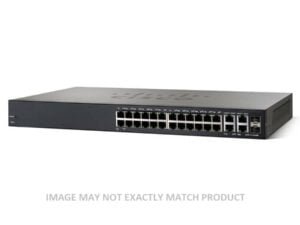
C1200-48P-4X Cisco Catalyst 48 Port Managed Switch
£662.34£794.81 Incl. VAT
## Comprehensive Features of the Cisco Catalyst 1200 Ethernet Switch ### Manufacturer and Product Specifications ? Brand: Cisco ? Part Number: C1200-48P-4X ? Product Type: Managed Ethernet Switch ? Family: Catalyst 1200 Series ### Network and Connectivity Options #### Ethernet and Expansion ? Supports 10 Gigabit Ethernet technology for high-speed networking. ? Equipped with 48 PoE+ (Power over Ethernet) RJ-45 ports for flexible device connectivity. ? Offers 4 SFP+ expansion slots for enhanced scalability. ? Compatible with optical fiber and twisted pair media. #### Uplink and Modular Design ? Includes uplink ports for seamless network expansion. ? Features a shared SFP slot to support dynamic usage. ? Modular structure ensures adaptability to evolving requirements. ### Power and Performance #### Power Management ? Total power consumption: 463.32 W. ? Comes with 375 W PoE budget for powering multiple devices. ? Power source options: AC power supply with one installed unit. #### Energy Efficiency ? Adheres to IEEE 802.3az Energy Efficient Ethernet standards. ### Form Factor and Compatibility ? Designed for rack-mountable installation with a 1U compatible rack unit. ? Ideal for space-constrained environments requiring robust network solutions. ### Layer 3 Switching Capabilities ? Operates at Layer 3, supporting advanced routing protocols for optimized network performance. ### Industry-Standard Compliance ? Conforms to a wide range of standards, including: IEEE 802.1x for network access control. IEEE 802.3af/at for PoE and PoE+ support. IEEE 802.3ad for link aggregation. IEEE 802.1Q for VLAN tagging. IEEE 802.11ac wireless standards integration. ? IEEE 802.1x for network access control. ? IEEE 802.3af/at for PoE and PoE+ support. ? IEEE 802.3ad for link aggregation. ? IEEE 802.1Q for VLAN tagging. ? IEEE 802.11ac wireless standards integration. ### Port Details and Specifications ? Provides 48 Gigabit Ethernet PoE+ ports for versatile device connectivity. ? Includes 4 high-speed 10 Gigabit Ethernet expansion slots to support growing network demands. ## Cisco C1200-48P-4X Catalyst Managed Switch Overview The Cisco C1200-48P-4X Catalyst 48 Port Gig PoE+ Managed Switch is an advanced networking solution designed for small to medium-sized businesses, enterprises, and service providers. This managed switch offers robust performance, scalability, and enhanced power delivery features, making it ideal for high-demand networking environments. Its 48 Gigabit Ethernet ports and four dedicated SFP+ uplink slots provide versatile connectivity options for both current and future networking needs. ### Key Features of Cisco C1200-48P-4X The C1200-48P-4X switch combines state-of-the-art technology with user-friendly features to enhance network management and efficiency. #### 48 Gigabit Ethernet Ports This switch is equipped with 48 Gigabit Ethernet ports that deliver high-speed data transmission. These ports are ideal for connecting workstations, IP cameras, access points, and other critical network devices, ensuring seamless communication and optimized network performance. #### Power over Ethernet Plus (PoE+) The Power over Ethernet Plus (PoE+) capability allows the switch to deliver power and data over a single cable to PoE-enabled devices. With a total PoE budget sufficient to support high-power devices, such as IP cameras, VoIP phones, and wireless access points, this switch simplifies cabling and reduces installation costs. #### Four SFP+ Uplink Slots The four SFP+ uplink slots provide high-speed 10Gbps connections, allowing for seamless integration with backbone networks or data centers. These uplinks support fiber and copper transceivers, offering flexibility for various network topologies and distances. #### Advanced Security Features The Cisco C1200-48P-4X switch includes advanced security protocols such as port security, access control lists (ACLs), and 802.1X authentication. These features safeguard the network against unauthorized access and potential threats, ensuring a secure environment for sensitive data. #### Energy-Efficient Design Designed with energy efficiency in mind, this switch uses intelligent power management to minimize energy consumption without compromising performance. Features like Energy Efficient Ethernet (EEE) contribute to lower operational costs and reduced environmental impact. ### Performance and Scalability #### High Bandwidth for Demanding Applications The Cisco C1200-48P-4X supports a high switching capacity and forwarding rate, ensuring reliable performance for bandwidth-intensive applications such as video conferencing, cloud computing, and large file transfers. #### Scalable Network Deployment This switch is ideal for growing businesses, thanks to its stackable architecture and support for virtual stacking. These capabilities enable seamless network expansion without compromising performance or manageability. ### Ease of Management #### Intuitive Web Interface The intuitive web-based interface simplifies switch configuration and management, making it accessible to users with varying levels of technical expertise. This feature reduces the learning curve and accelerates deployment. #### Command-Line Interface (CLI) For advanced users, the CLI offers granular control over switch settings and configurations. This feature is particularly beneficial for network administrators seeking to fine-tune performance and implement custom policies. #### Centralized Management via Cisco DNA Center The switch integrates seamlessly with the Cisco Digital Network Architecture (DNA) Center, enabling centralized management and automation. This platform provides insights into network health, facilitates troubleshooting, and optimizes overall performance. ### Applications of the Cisco C1200-48P-4X #### Small to Medium-Sized Businesses (SMBs) SMBs can leverage the C1200-48P-4X for its cost-effective yet powerful features, enabling reliable connectivity and scalability as the business grows. The PoE+ support further simplifies the deployment of IP-based devices. #### Enterprise Networks In enterprise environments, this switch serves as a core or access layer device, supporting a large number of users and devices while maintaining robust security and high-speed performance. #### Service Providers Service providers can use the C1200-48P-4X in their infrastructure to deliver reliable, high-speed connectivity to clients. Its advanced management features and scalability make it a valuable addition to their networking solutions. ### Technical Specifications #### Hardware Specifications ? 48 x 10/100/1000 Gigabit Ethernet ports ? 4 x SFP+ uplink slots (10Gbps) ? PoE+ with a total budget of [insert wattage] ? Switching capacity: [insert capacity] ? Forwarding rate: [insert rate] #### Software Specifications ? Layer 2 and Layer 3 support ? Quality of Service (QoS) ? VLAN support ? Security protocols: 802.1X, ACLs, port security ? Management: Web GUI, CLI, Cisco DNA Center ### Benefits of the Cisco C1200-48P-4X #### Enhanced Network Efficiency The high-speed ports, PoE+ capabilities, and intelligent features of this switch ensure maximum efficiency in network operations. Whether supporting critical business applications or managing a growing network, the C1200-48P-4X optimizes performance with ease. #### Cost Savings By combining power and data delivery with advanced energy-saving technologies, the switch reduces cabling complexity and operational costs. It is a cost-effective solution for businesses looking to enhance their network infrastructure without exceeding their budget. #### Future-Proof Design With support for high-speed uplinks and advanced features, the C1200-48P-4X is designed to meet current networking demands while accommodating future technological advancements. This future-proof approach ensures long-term value for businesses and organizations.C9300X-24Y-E Cisco Catalyst 9300X 24X25G Ethernet Switch
£8,292.21£9,950.65 Incl. VAT
Product Overview ### General Specifications ? Device Type: Network Switch - 24 Ports, Layer 3, Managed, Stackable ? Form Factor: Rack-Mountable, 1U ? Network Interface: 25 Gigabit Ethernet ### Port and Performance Details ? Ports: 24 x 1/10/25 Gigabit SFP28 ? Switching Capacity: 2000 Gbps (standard), 3000 Gbps (with stacking) ? Forwarding Rate: 1488 Mpps (standard), 2232 Mpps (with stacking) #### Capacity Metrics ? IPv4 Routing Table Entries: 39,000 ? Flexible NetFlow Entries: 128,000 ? Direct IPv4 Routes: 24,000 ? Indirect IPv4 Routes: 15,000 ? IPv6 Routing Table Entries: 19,500 ? VLAN IDs: 4,094 ? Switched Virtual Interfaces (SVIs): 1,000 ? Multicast Routing Flow Table: 8,000 ? QoS Scale Entries: 4,000 ? ACL Scale Entries: 5,000 ? PVST Instances: 300 ? STP Virtual Ports for PVST: 13,000 ? STP Virtual Ports for MST: 13,000 ? Routed Ports: 448 ### MAC Address Table and Frame Support ? MAC Address Table Size: 32,000 Entries ? Jumbo Frame Support: 9,198 Bytes #### Routing and Protocol Support ? Routing Protocols: OSPF, IS-IS, RIP-1, RIP-2, IGMP, VRRP, PIM-SM, OSPFv3, PIM-SSM, Policy-Based Routing (PBR), RIPng ##### Remote Management and Security ? Management Protocols: SNMP v1, RMON v1, RMON v2, SNMP v3, SNMP v2c, CLI, NETCONF, RESTCONF ? Encryption: 256-bit AES #### Advanced Features ? DHCP Support ? Trunking Capabilities ? Syslog Support ? Full Duplex Mode ? Stateful Switchover (SSO) ? Class-Based Weighted Fair Queuing (CBWFQ) ? Weighted Random Early Detection (WRED) ? Spanning Tree Protocol (STP) Support ? Access Control List (ACL) Support ? Quality of Service (QoS) ? Non-Stop Routing (NSR) ? Remote Switch Port Analyzer (RSPAN) ? Management Information Base (MIB) ? Cisco StackWise-480 Technology ? Cisco StackPower Technology ? Flexible NetFlow (FNF) ? Multicast Source Discovery Protocol (MSDP) ? 802.1x Authentication ? 16 MB Packet Buffer ? FTP Client ? MACsec Support ? Three Fans ? Control Plane Protection (CoPP) ? Virtual Extensible LAN (VXLAN) ? Application Visibility and Control (AVC) ? Source-Specific Multicast (SSM) ? Integrated Wireshark ? VLAN Double Tagging (Q-in-Q) ? Ethernet Over MPLS (EoMPLS) ? Hierarchical Virtual Private LAN Service (H-VPLS) ? Private VLAN ? Layer 3 VPN (L3VPN) Support ? Encapsulated Remote SPAN (ERSPAN) ? Security Group Tag (SGT) Caching ? Security Group Access Control List (SGACL) ? IT Service Management (ITSM) Integration ? Third-Party IP Address Management (IPAM) Integration ? Cisco StackWise-1T Technology ### Standards Compliance ? IEEE 802.3, IEEE 802.3u, IEEE 802.1d ? IEEE 802.1q, IEEE 802.3ab, IEEE 802.1p ? IEEE 802.3af, IEEE 802.3x, IEEE 802.3ad (LACP) ? IEEE 802.1w, IEEE 802.1x, IEEE 802.1s ? IEEE 802.3at ### Memory and Connectivity ? RAM: 16 GB ? Flash Memory: 16 GB ? Status Indicators: Status LED #### Expansion and Connectivity Options ? Interfaces: 24 x 1/10/25GBASE-X SFP28, 1 x USB 2.0 ? Expansion Slots: 1 (total), 1 (available) ##### Power Specifications ? Power Device: Internal Power Supply ? Power Output: 715 Watts ? Required Voltage: AC 120/230 V (50/60 Hz) ## Ports The Cisco Catalyst 9300X 24X25G Ethernet Switch is equipped with 24 ports, making it an ideal choice for businesses and organizations that require a high number of connections. These ports provide users with flexibility and scalability, allowing them to easily connect multiple devices and expand their network as needed. ### Increased Connectivity With 24 ports, the Cisco Catalyst 9300X enables users to connect a wide range of devices, including computers, servers, printers, and other networking equipment. This increased connectivity allows for seamless communication and data transfer between devices, improving overall productivity and efficiency. #### Reduced Network Congestion Having a sufficient number of ports helps to distribute network traffic evenly across the switch. This reduces network congestion and ensures that each connected device receives optimal bandwidth. With fewer devices sharing a single port, users can enjoy faster and more reliable network performance. #### Future-Proofing The 24 ports on the Cisco Catalyst 9300X provide room for growth and expansion. As businesses continue to grow and add more devices to their network, having additional ports available ensures that they won't face any limitations or bottlenecks in the future. This future-proofing feature allows organizations to scale their network effortlessly without the need for additional infrastructure investments. ##### Flexibility in Network Design The high number of ports on the Cisco Catalyst 9300X gives users the flexibility to design their network in the most efficient way possible. Whether it's setting up separate VLANs for different departments or creating redundant links for increased reliability, having 24 ports provides ample options for network design customization. ##### Improved Network Performance With 24 ports, the Cisco Catalyst 9300X enables users to take full advantage of link aggregation technologies such as EtherChannel. By combining multiple ports into a single logical link, link aggregation increases bandwidth and enhances network performance. This feature is particularly beneficial for bandwidth-intensive applications or environments that require high-speed data transfer. ## Manageable The Cisco Catalyst 9300X 24X25G Ethernet Switch is designed to be easily manageable, providing users with a comprehensive set of tools and features to monitor and control their network effectively. ### Centralized Network Management With the Cisco Catalyst 9300X, users can benefit from centralized network management. The switch is compatible with Cisco DNA Center, a powerful network management platform that allows administrators to configure, monitor, and troubleshoot their entire network from a single interface. This centralized approach simplifies network management tasks and reduces the time and effort required for network administration. #### Streamlined Configuration The Cisco Catalyst 9300X offers a user-friendly interface for configuration purposes. It supports various management protocols, including SNMP, SSH, and Telnet, making it easy for administrators to access and configure the switch remotely. The intuitive configuration options ensure that even users with limited networking knowledge can set up and manage the switch efficiently. #### Proactive Monitoring and Troubleshooting The Cisco Catalyst 9300X comes equipped with advanced monitoring and troubleshooting capabilities. It supports features such as NetFlow, which allows administrators to analyze network traffic patterns and identify potential issues or bottlenecks. Additionally, the switch offers integrated diagnostics tools that help detect and resolve problems quickly, minimizing network downtime and ensuring optimal performance. ##### Enhanced Security Effective network management includes robust security measures. The Cisco Catalyst 9300X offers comprehensive security features that protect the integrity of the network. These features include access control lists (ACLs), which allow administrators to define granular security policies for traffic filtering, as well as secure management protocols such as HTTPS and SNMPv3. With these security measures in place, users can have peace of mind knowing that their network is protected against unauthorized access and potential threats. ##### Automation and Orchestration The Cisco Catalyst 9300X supports automation and orchestration capabilities, allowing users to streamline network operations and reduce manual effort. Through integration with Cisco DNA Center, users can automate routine tasks, such as device provisioning and configuration updates, saving time and minimizing the risk of human errors. This automation feature is especially valuable for organizations with large-scale networks or those embracing digital transformation initiatives. ## Modular The Cisco Catalyst 9300X 24X25G Ethernet Switch offers a modular design, providing users with flexibility and scalability to meet their evolving networking needs. ### ScalabilityIE-3100-8T2C-E Cisco Catalyst Rugged Series 10 Port Switch
£1,883.12£2,259.74 Incl. VAT
## Overview of the Cisco IE-3100-8T2C-E 10 Ports Switch ### Key Specifications ? Manufacturer: Cisco ? Model Number: IE-3100-8T2C-E ? Series: IE3100 Rugged Series ? Device Type: Switch ? Mounting: Din Rail Mountable ### Port Configuration #### Total Ports ? 8 x 10/100/1000 Mbps Ethernet Ports ? 2 x Combo Gigabit Ports #### Capacity Metrics ? Egress Queues per Port: 8 ? Unicast MAC Address Support: Up to 8000 ? IGMP Group Capacity: 512 ? VLAN Group Capacity: 256 ? IPv4 Unicast Indirect Routing: 2000 ? Spanning Tree Protocol Instances: 128 ### Management Protocols The device supports various remote management protocols including: ? SNMP ? Netconf ? Restconf ? Modbus ? DHCP ### Advanced Features ? Layer 2 Switching Capabilities ? Resilient Ethernet Protocol (REP) ? Media Redundancy Protocol (MRP) ### Compliance Standards ? IEEE 802.3u ? IEEE 802.3z ? IEEE 802.1d ? IEEE 802.1q ? IEEE 802.3ab ? IEEE 802.1p ? IEEE 802.3ad (LACP) ? IEEE 802.1w ? IEEE 802.1x ? IEEE 802.1s ? IEEE 802.3ah ? IEEE 802.1ab (LLDP) ? IEEE 1588v2 ? IEEE 1613 ### Memory and Power #### RAM ? 4 GB RAM #### Power Specifications ? Power Source: External Power Adapter ? Power Input: 12 - 48 V, 2 A ### Connectivity Options #### Interfaces ? 8 x 10/100/1000 Base-T RJ-45 Ports ? 2 x 1000Base-TX Ports ? 1 x Console RJ-45 Port ? 1 x Micro-USB / Mini-USB Port ## Name: Catalyst IE-3100-8T2C-E The Cisco Catalyst IE3100 Rugged Series Switch is a powerful networking solution designed for harsh industrial environments. One of its standout features is its name, the Catalyst IE-3100-8T2C-E. This unique name represents the specific model of the switch and highlights its capabilities and functionalities. ### Benefits of the Catalyst IE-3100-8T2C-E The Catalyst IE-3100-8T2C-E offers a wide range of benefits that make it an ideal choice for industrial applications. These benefits include: #### 1. Enhanced Performance With the Catalyst IE-3100-8T2C-E, users can expect superior performance in their industrial networks. The switch is equipped with advanced hardware and software features that enable it to handle demanding workloads efficiently. It can deliver high-speed data transfer rates, ensuring smooth and uninterrupted operation even in challenging environments. #### 2. Advanced Security Industrial networks are often vulnerable to cyber threats, making security a top priority. The Catalyst IE-3100-8T2C-E incorporates robust security features to protect critical data and infrastructure. It supports advanced security protocols such as MACsec encryption, which safeguards communication between devices and prevents unauthorized access. #### 3. Reliable Connectivity In industrial settings, connectivity plays a crucial role in maintaining smooth operations. The Catalyst IE-3100-8T2C-E offers reliable connectivity options with its eight 10/100/1000 Ethernet ports and two combo SFP/RJ45 Gigabit Ethernet ports. This enables seamless communication between devices and ensures uninterrupted data flow. #### 4. Industrial-grade Durability The rugged design of the Catalyst IE3100 Rugged Series Switch makes it suitable for deployment in harsh environments. The switch is built to withstand extreme temperatures, humidity, and vibrations, ensuring uninterrupted operation even in the most challenging industrial conditions. Its compact form factor and robust construction make it ideal for space-constrained installations. #### 5. Simplified Management Managing industrial networks can be complex, but the Catalyst IE-3100-8T2C-E simplifies the process. It supports Cisco's industry-leading management tools and software, providing administrators with intuitive interfaces and advanced monitoring capabilities. This allows for efficient network configuration, troubleshooting, and performance optimization. ## Ports: 10 The Cisco Catalyst IE3100 Rugged Series Switch is equipped with ten ports, making it a versatile networking solution for industrial applications. The ten ports provide various connectivity options and offer numerous benefits for users. ### Benefits of Having 10 Ports #### 1. Flexibility and Scalability The ten ports on the Catalyst IE3100 Rugged Series Switch provide users with the flexibility to connect multiple devices simultaneously. This allows for easy expansion of the network as the requirements grow over time. Whether it's connecting industrial machinery, surveillance cameras, or access points, having ten ports ensures that there are sufficient connections available to meet the demands of the application. #### 2. Redundancy and High Availability In industrial environments, network failure can have severe consequences. Having ten ports on the Catalyst IE3100-8T2C-E enables users to implement redundancy measures to ensure high availability. By connecting critical devices through multiple ports, users can create redundant paths that automatically switch in case of a link failure, minimizing downtime and maintaining continuous operation. #### 3. Increased Bandwidth With ten ports, the Catalyst IE3100 Rugged Series Switch provides users with increased bandwidth capacity. Each port can handle high-speed data transfer, allowing for efficient communication between devices. This is particularly beneficial in industrial applications that involve large data transfers or real-time monitoring, ensuring smooth and responsive operations. #### 4. Simplified Network Segmentation Network segmentation is essential in industrial environments to isolate different areas or departments for security and performance reasons. The Catalyst IE3100-8T2C-E's ten ports allow for easy network segmentation, enabling users to create separate virtual LANs (VLANs) and control the flow of traffic between them. This enhances security and improves network performance by reducing broadcast traffic and optimizing data routing. #### 5. Versatile Connectivity Options The ten ports on the Catalyst IE3100-8T2C-E offer versatile connectivity options to accommodate various devices and networking requirements. The switch supports both Ethernet and Gigabit Ethernet connections, providing compatibility with a wide range of devices such as sensors, cameras, PLCs, and more. The availability of combo SFP/RJ45 ports further enhances connectivity options, allowing users to connect to fiber-optic networks if needed. ##### Conclusion The Cisco Catalyst IE3100 Rugged Series Switch, with its Catalyst IE-3100-8T2C-E name and ten ports, offers advanced features and benefits tailored for industrial environments. Its enhanced performance, advanced security, reliable connectivity, industrial-grade durability, and simplified management make it an excellent choice for industrial applications. The ten ports provide flexibility, scalability, redundancy, increased bandwidth, simplified network segmentation, and versatile connectivity options. Whether it's for manufacturing facilities, transportation systems, or oil and gas installations, the Catalyst IE3100 Rugged Series Switch is designed to meet the demanding requirements of industrial networking.N9K-C93216TC-FX2= Cisco Nexus Network 96 Ports Managed Switch
£7,155.84£8,587.01 Incl. VAT
## High-Performance Cisco N9K-C93216TC-FX2= Switch ### Advanced Layer 3 Managed Switching ? Designed for enterprise-grade network efficiency ? 96 high-speed ports supporting 100G QSFP28, 40G QSFP28, and 10G Ethernet ? Optimized for front and side airflow with a rack-mountable 2U form factor ### Exceptional Data Throughput & Switching Capacity ? Delivers an impressive 4.32 Tbps bandwidth ? Handles up to 1.6 billion packets per second (Bpps) ? Robust ACL entries: 5000 (ingress), 2000 (egress) ? Supports 32,000 IGMP snooping and multicast routes ? Scales with up to 16,000 Virtual Routing and Forwarding (VRF) instances ### Comprehensive Routing & Protocols ? Compatible with OSPF, BGP, EIGRP, RIP, MPLS, and ECMP ? Enhanced multicast capabilities via PIM-SM, MSDP, and SSM ? Multi-instance spanning tree support (MSTP) for network resilience ? Up to 64 ECMP paths and 512 port channels #### Security & Network Optimization ? Integrated support for Virtual Port Channel (vPC) technology ? MACsec encryption for secure data transmission ? VXLAN & EVPN for advanced network segmentation ? Supports NAT with up to 1023 entries ### Hardware & Connectivity ? Onboard 128GB SSD for enhanced system operations ? 24GB RAM for high-speed processing ? Dedicated management ports: 1 x SFP+, 1 x RJ-45 ? Expansion with 12 x 100G/40G QSFP28 & 96 x 10GBase-T RJ-45 #### Reliable Power & Cooling ? Dual hot-swappable internal power supplies (1200W each) ? Optional redundancy for uninterrupted operations ? Three high-efficiency fan trays ensuring optimal cooling ##### Package Contents ? 1x Cisco N9K-C93216TC-FX2= Switch ? 2x NXA-PAC-1200W-PI Power Supplies ? 3x NXA-FAN-160CFM-PI Fan Trays ? Essential power cords & console cable included ## Cisco N9K-C93216TC-FX2= Managed Gigabit Switch: High-Performance Networking The Cisco N9K-C93216TC-FX2= is a cutting-edge managed switch engineered for enterprises requiring ultra-fast data transfer, flexible connectivity, and optimal efficiency in high-density networking environments. This switch provides an outstanding combination of 96 x 10-Gigabit Ethernet ports and 96 QSFP28/40-Gigabit QSFP28 uplinks, ensuring seamless integration into modern data centers and network infrastructures. ### Advanced Switching Performance Designed for high-speed data transmission and low-latency performance, the Cisco N9K-C93216TC-FX2= offers: ? Industry-leading throughput with 10GbE access and 40/100GbE uplinks ? Non-blocking architecture for optimal data flow ? High-speed packet forwarding and ultra-low latency #### Superior Traffic Management With advanced traffic prioritization features, this switch supports QoS mechanisms, traffic shaping, and congestion management, ensuring uninterrupted performance for critical applications. ##### Quality of Service (QoS) Implementing QoS, the N9K-C93216TC-FX2= provides granular traffic control with features such as: ? Bandwidth allocation per application ? Low-latency queuing for priority traffic ? Strict priority queuing for critical services ### Scalability and Flexibility Designed for growing enterprises, this switch supports scalability with modular uplink options, seamless integration into existing infrastructures, and software-defined networking (SDN) capabilities. #### Data Center-Ready Features The Cisco N9K-C93216TC-FX2= is optimized for data centers, featuring: ? High-density port configurations for increased efficiency ? Low power consumption for energy-efficient operations ? Support for Virtual Extensible LAN (VXLAN) and other advanced networking protocols ##### Integration with Cisco ACI Seamlessly integrates with Cisco?s Application Centric Infrastructure (ACI), enhancing automation, security, and network visibility. ### Robust Security Features Security is a top priority in enterprise networking, and this switch includes advanced security protocols such as: ? Role-based access control (RBAC) ? Secure Boot and runtime defenses ? Packet inspection and anomaly detection #### Enhanced Threat Protection With built-in security features, it mitigates threats through: ? Micro-segmentation ? Encrypted traffic analytics ? Real-time threat detection ### Ease of Deployment and Management Featuring an intuitive management interface, this switch simplifies deployment with: ? Zero-touch provisioning ? Support for Cisco DNA Center ? Comprehensive monitoring and automation tools #### Cloud-Enabled Management Offers seamless integration with cloud-based network management platforms for remote configuration and monitoring. ### Reliability and Redundancy Engineered for mission-critical environments, the switch includes redundant power supplies, hot-swappable fans, and failover capabilities to ensure continuous uptime. #### High Availability Features Minimizing network downtime with features like: ? Redundant power supply units (PSUs) ? Hitless software upgrades ? Graceful restart mechanisms ##### Front and Side-to-Back Airflow Optimized cooling design with front and side-to-back airflow ensures thermal efficiency, making it suitable for high-density deployments.Cisco N9K-C9508-FM-G 8 Slot 1.6 TBPS Switch Fabric Module
£4,306.91£5,168.29 Incl. VAT
## Cisco N9K-C9508-FM-G Nexus 9500 Cloud-Scale Fabric Module Overview The Cisco N9K-C9508-FM-G is an advanced cloud-scale fabric module engineered for the Nexus 9500 8-slot chassis, delivering deterministic performance and resilient switching for modern data centers. It interconnects line cards through a high-bandwidth, low-latency fabric, sustaining predictable throughput for virtualized, containerized, and bare-metal workloads. ? Purpose-built fabric for the Nexus 9500 8-slot chassis, enabling non-blocking internal connectivity ? Optimized for cloud-scale architectures with consistent forwarding and predictable latency ? Enterprise-grade reliability with redundant deployment options and hot-swappable handling ? Ideal for leaf-spine, EVPN-VXLAN, and multi-tenant environments requiring steady high bandwidth ### Key Identifiers and Commercial Details ? Manufacturer: Cisco ? Part Number / SKU: N9K-C9508-FM-G ? Product Type: Switch component ? Sub-Type: Fabric Module for Nexus 9500 Series (8-slot) ### Performance Characteristics ? Aggregate Fabric Capacity: 1.6 Tbps designed for sustained high-throughput operation ? Flow Size: Up to 400 Gbps, supporting demanding east-west traffic patterns ? Engineered for non-blocking fabric backplane connectivity across all active line cards ? Low, consistent latency to preserve application performance under heavy load ### Power, Cooling, and Physical Attributes ? Typical Power Draw: ~685 W for efficient, high-density switching fabrics ? Thermal Handling: Designed to align with chassis airflow for stable operation ? Approximate Weight: 14.08 lb for straightforward handling during maintenance ? Field-replaceable unit (FRU) supporting hot-swap procedures to minimize downtime ## Architecture Fit and Use Cases This module underpins cloud-scale designs where horizontal scalability, fault isolation, and consistent throughput are essential. It is equally suited to private clouds, enterprise core fabrics, and service-provider data centers consolidating mixed workloads. ? EVPN-VXLAN overlays that demand steady spine-level bandwidth across tenants ? High-performance compute clusters requiring deterministic east-west traffic ? Storage networking use cases that benefit from consistent intra-fabric throughput ? Multi-site and hybrid cloud fabrics with predictable scale-out expansion ### Operational Advantages ? Scalable fabric capacity enabling future line-card growth without re-architecting ? Predictable, balanced traffic distribution across fabric channels ? Resilient design to maintain forwarding continuity during component events ? Simplified lifecycle operations through standardized module handling #### Cloud-Ready Features ? Works in EVPN-VXLAN fabrics to simplify multi-tenant segmentation ? Supports telemetry-rich operations when combined with Nexus 9000 software features ? Complements automation frameworks (e.g., DCNM/NDFC, Ansible) at the fabric level ##### Performance Optimization Highlights ? Line-rate, fabric-level bandwidth for concurrent high-density interfaces ? Traffic symmetry to avoid micro-bursts and hotspots within the chassis ? Latency consistency aiding time-sensitive application tiers ## Compatibility and Deployment Considerations The N9K-C9508-FM-G is designed for the Nexus 9500 8-slot chassis. For full functionality, pair with compatible supervisors, line cards, and power systems recommended for the platform generation. ? Validated with Nexus 9500 8-slot chassis ecosystems and recommended NX-OS releases ? Aligns with chassis airflow direction for optimal thermal performance ? Supports redundant fabric configurations for higher availability targets ? Adheres to Cisco best practices for fabric cabling and slot population ### Installation and Handling Notes ? Follow ESD precautions and rack-level safety guidelines ? Insert the module firmly until latches engage, verifying status LEDs per documentation ? Coordinate fabric insertion with maintenance windows when changing multiple modules ? Use proper lifting technique; unit weight is approximately 14.08 lb #### Power Planning Tips ? Budget around 685 W per module under typical conditions ? Account for redundancy, thermal headroom, and growth in overall power design ? Verify PDU capacity and UPS runtime with projected peak loads ##### Cooling Guidelines ? Maintain clear airflow paths front-to-back or back-to-front per chassis configuration ? Monitor inlet temperature and fan speeds via platform telemetry ? Observe recommended ambient ranges to prolong component lifespan ## Reliability, Security, and Compliance ? Redundant fabric deployment options to minimize single-point failures ? Secure supply-chain and platform integrity features at the Nexus 9000 family level ? Compliance with data-center regulatory norms when installed within certified chassis ### Lifecycle and Management ? Visibility through platform monitoring tools and streaming telemetry ? Integration with automation pipelines for repeatable configuration baselines ? Proactive alerting for power, temperature, and fabric health #### Serviceability Advantages ? Hot-swappable FRU simplifies replacement without full chassis shutdown ? Modular design accelerates RMA processes and reduces MTTR ? Clear labeling and latch mechanisms aid quick, accurate servicing ##### Sustainability Notes ? Efficient power profile relative to delivered fabric bandwidth ? Supports consolidation strategies that reduce overall rack footprint ? Telemetry aids in right-sizing power and cooling for greener operations ## At-a-Glance Specifications ? Model: Cisco N9K-C9508-FM-G ? Chassis Fit: Nexus 9500 8-slot ? Role: Fabric Module (Switch backplane component) ? Aggregate Fabric Throughput: 1.6 Tbps ? Flow Size: 400 Gbps ? Typical Power: 685 W ? Approximate Weight: 14.08 lb ### Product overview ? Cisco N9K-C9508-FM-G Fabric Module The Cisco N9K-C9508-FM-G is an 8-slot cloud-scale fabric module engineered for the Nexus 9500 family of modular data-center switches. Designed to deliver ultra-high throughput, deterministic latency, and resilient fabric interconnects between line cards, the FM-G variant raises the bar for hybrid cloud, virtualization, and large east-west traffic environments. It is commonly deployed in aggregation and spine layers where predictable line-rate switching and nondisruptive scalability are required. This description drills into architecture, performance, compatibility, deployment best practices, management, and purchase/upgrade considerations so you can assess fit for your data center designs and procurement decisions. Key technical highlight: the FM-G family is specified to provide up to 1.6 Tbps of fabric capacity (per module design used in the 8-slot chassis), enabling high-density line cards to operate at full line rate. ## Architecture and cloud-scale fabric design ### Clos fabric fundamentals The Nexus 9500 platform uses a Clos-style fabric architecture where multiple fabric modules create a nonblocking backplane that interconnects all line cards. The FM-G is implemented as a high-performance fabric plane optimized for large flows and dense aggregation use cases. This modular approach provides linear scaling: adding compatible fabric modules increases aggregate switching bandwidth while preserving the forwarding characteristics of the platform. ### Scalability and slot distribution In an 8-slot chassis, the FM-G sits in the rear bays and operates together with other fabric modules to realize the full bandwidth available to each line-card slot. Because the Nexus 9500 chassis can accept different fabric module types, the FM-G option gives you a higher per-slot bandwidth ceiling than earlier fabric families, allowing denser, faster line cards to achieve their designed throughput. The chassis supports redundant fabric planes to keep forwarding paths resilient under failure conditions. ## Performance characteristics ### Throughput and fabric bandwidth The FM-G fabric module is rated to support up to 1.6 Tbps of aggregate fabric bandwidth per module in the 8-slot architecture (reference Cisco datasheets for exact per-slot distribution in mixed configurations). This capability is intended to support modern line cards that push 100/400G ports and require broad internal switching capacity. When planning capacity, remember total chassis bandwidth depends on the number and type of fabric modules installed and the set of installed line cards. ### Latency, flow handling, and buffer behavior To support latency-sensitive applications ? such as real-time storage fabrics, NFV workloads, and east-west VM migration traffic ? the FM-G is designed to minimize ingress-to-egress latency across the chassis. The module works with the Nexus 9500 forwarding ASICs to balance packets across available fabric planes; internal buffering and load distribution mechanisms are tuned for predictable packet handling under heavy microburst conditions. Cisco documentation outlines how line-card buffers and fabric capacities combine to meet line-rate performance for the portfolio of supported cards. ## Compatibility & interoperability ### Supported chassis and line cards The N9K-C9508-FM-G is specifically intended for use with the Nexus 9508 chassis and is compatible with the Cloud-Scale family of Nexus 9500 line cards. When mixing fabric module types or using different line cards, consult the official Nexus 9500 platform line-cards and fabric modules datasheet to confirm compatibility tables, required module counts, and slot population rules. Use of mismatched fabric families requires careful attention to empty-slot filler modules or FAN-PWR modules per Cisco guidance. ### Population rules and installation notes Cisco?s hardware installation guidance notes that when FM-G fabric modules are deployed, any empty fabric module slots should be filled with the specified FAN-PWR modules to preserve thermal, airflow, and power balance in the chassis. Additionally, certain fabric families have specific requirements about leaving slots empty or inserting ?cover? modules for safety and compatibility ? always consult the chassis installation and fabric module release notes before changing module types. ## Power, thermal and physical details ### Electrical and thermal planning Fabric modules are among the higher-power components in a modular chassis; the FM-G has a typical power consumption profile that must be planned alongside line cards, power supplies, and fans. Exact wattage differs by part revision and system population; check the platform datasheet and the hardware installation guide for measured typical and maximum power figures for the FM-G variant. Adequate rack PDUs, power redundancy (n+1 or combined modes), and thermal dissipation strategies are essential for reliable operation in confined racks. ### Mechanical footprint and weight The FM-G is a rear-mounted plug-in fabric module sized for the Nexus 9508 chassis. Weight and physical dimensions are documented in the official datasheet; these matter when planning shipping, rack rails, and field installation steps. Always use ESD-safe handling and follow Cisco?s field installation instructions to avoid damage to the backplane connectors. ## High availability and resiliency features ### Redundant fabric planes and non-stop forwarding The Nexus 9500 design enables multiple fabric planes so that traffic can be load-balanced and survive a fabric module failure without forwarding interruption. When the chassis is populated with the recommended number and types of fabric modules, the switch can maintain forwarding while a plane is taken offline for maintenance ? assuming correct line card and fabric population and adherence to Cisco?s hardware redundancy guidelines. This behavior supports maintenance windows with minimal application disruption. ### Operational considerations for maintenance Planned software upgrades and hardware swaps should follow Cisco?s recommended workflows; for large chassis with FM-G modules, the preferred approach often uses in-service software upgrades (ISSU) and staged module replacements to avoid traffic loss. Documented procedures in the hardware guide define safe removal and insertion practices and the exact steps to preserve forwarding state during module-level operations. ## Management, visibility and operational tooling ### NX-OS integration and telemetry Fabric modules are managed through the Nexus NX-OS control plane ? health, utilization, and telemetry data are exposed via CLI, XML/JSON APIs, and modern telemetry streams (e.g., gNMI/RESTCONF depending on NX-OS version). This integration enables automated capacity monitoring and telemetry-driven scaling decisions. Use Nexus monitoring features to track fabric utilization per plane and per line card slot, then integrate those metrics into your data-center dashboards and alerting. ### Diagnostics and proactive health checks Cisco provides platform diagnostics for fabric modules, including self-test routines and fabric-plane counters to quickly surface link or plane anomalies. Integrating these checks into routine operations reduces mean-time-to-repair and can automate dispatch triggers for replacement modules under warranty or support contracts. Document retrieval of fabric telemetry metrics as part of change and incident playbooks. ## Deployment patterns and use cases ### Hyperscale aggregation and multi-tenant data centers For environments that push very high throughput between server racks (east-west heavy traffic), the FM-G enables line cards to saturate 100/400G ports and achieve consistent inter-slot bandwidth. Typical use cases include spine/aggregation fabrics for private cloud providers, multi-tenant colocation fabrics, and telco NFV aggregation where predictable internal switching is critical to service quality. ### High-performance computing and storage backbones Compute clusters and storage fabrics (e.g., NVMe over Fabrics, massively distributed storage) demand low latency and high internal bandwidth. The FM-G, when combined with appropriate line cards, provides the internal switching capacity and flow handling characteristics to support these workloads with fewer chassis and less oversubscription than older fabric options. ### Campus aggregation for large enterprise cores Large campus cores that consolidate multiple aggregation switches can use Nexus 9500 systems with FM-G modules to centralize policy and routing while preserving headroom for bursts and future growth. This deployment reduces the number of devices to manage while enabling consistent policy enforcement across distributed sites when paired with Cisco management suites. ## Purchase, upgrade, and lifecycle considerations ### Choosing the right fabric module for long-term growth Select FM-G when your roadmap includes sustained migration to higher-speed line cards (100G/400G) or when you want significant per-slot headroom for unpredictable growth. If you already operate earlier fabric families, evaluate migration paths: in many cases you can replace fabric modules while preserving existing line cards, but check compatibility tables for mixed populations and required blank/filler modules. ### Support, spares and warranties When procuring FM-G modules, include spare modules and maintain support contracts to reduce downtime for hardware failures. Ensure you have documentation for module part numbers and compatibility with your installed line cards so field engineers can quickly identify correct spares. Many resellers and Cisco partners can offer refurbishment options, but verify warranty and support scope before accepting refurbished modules in production. ## Migration and configuration best practices ### Staged migration approach To move from an older fabric family to FM-G, plan a staged approach: (1) audit existing line cards and their fabric requirements, (2) acquire the number of FM-G modules required for your population and redundancy model, (3) schedule maintenance windows and follow Cisco?s insertion/removal guidance to maintain air flow and power balance, and (4) validate traffic distribution and telemetry post-change. Avoid mixing incompatible fabric module revisions without consulting Cisco documentation. ### Configuration tips for optimal load balancing Leverage NX-OS features that enable optimal load distribution across fabric planes. Regularly monitor per-slot and per-plane utilization to detect imbalances; adjust line-card population or traffic engineering policies to avoid creating hot spots. Use telemetry to automate alerts when plane utilization approaches thresholds that would indicate potential congestion. ## Security and compliance considerations ### Physical security and tamper management Fabric modules are physical components of a chassis and should be controlled under the same physical security policies as server blades and storage arrays. Restrict rack access, log hardware changes, and integrate module serial numbers into asset management systems for audit and compliance tracking. ### Firmware and CVE management Keep NX-OS and module firmware aligned with your security patching cadence. Cisco publishes advisories and recommended releases; subscribe to security bulletins, validate fixes in lab environments, and schedule coordinated upgrades to chassis, line cards, and fabric modules to address vulnerabilities in a controlled manner. ## Comparison ? FM-G vs alternative fabric options ### When to choose FM-G over FM-E/FM-E2 FM-G is aimed at maximum per-slot bandwidth environments; FM-E and FM-E2 are alternatives optimized for different balance points of capacity, cost, and power. If your design centers on maximizing per-slot capacity for 100/400G line cards and long-term scaling, FM-G is the preferred option. For cost-sensitive or lower-speed environments, FM-E or FM-E2 may be more economical. Always match the fabric family to the line-card portfolio and budget profile. ### Operational tradeoffs Higher capacity fabrics like FM-G can increase power draw and thermal output; they also typically carry a higher acquisition cost. The tradeoff is fewer chassis and fabric planes needed to support equivalent bandwidth, which can reduce operational overhead over the long term. Model and compare total cost of ownership (TCO) that includes spare parts, power, cooling, and support contracts before committing to a fabric family. ## Quick reference ? checklist for deployment ? Confirm Nexus 9508 chassis and installed line cards are supported with FM-G as per Cisco compatibility tables. ? Plan for additional power and thermal headroom; document PDU and rack cooling specs. ? Order required filler/fan-power modules if there will be empty fabric slots during transition. ? Schedule staged insertion and hardware validation; verify telemetry and load balancing after insertion. ? Maintain spare FM-G module(s) under support contract or keep validated refurbished spares with known warranty. ## SEO & procurement keywords to consider ### Suggested keyword set for category pages In product descriptions, meta tags, and search snippets, include phrases such as: ?Cisco N9K-C9508-FM-G fabric module,? ?Nexus 9500 fabric module 1.6 Tbps,? ?8-slot cloud-scale switch fabric,? ?data center fabric module,? ?high throughput Nexus fabric,? ?Cisco FM-G compatibility,? and ?Nexus 9508 fabric installation guide.? These terms align with how network engineers and procurers search for high-performance fabric modules online. ## Useful Cisco documentation & resources ### Primary references For authoritative technical details, population rules, and exact power/weight figures, always consult Cisco?s Nexus 9500 line cards and fabric modules datasheet and the hardware installation guide. These documents provide the compatibility matrices and the formal installation steps required for field work. ### Where to validate pricing and support options Resellers and authorized Cisco partners list FM-G availability, refurbished options, and support packages; work with an authorized partner to obtain contract pricing, RMA support, and verified spares inventory. Public reseller listings can provide market context but should be confirmed with Cisco or a certified partner for warranty and software entitlement. ## Final technical notes (installation and field tips) ### Before you install ? Review the chassis revision and NX-OS version requirements for FM-G support. ? Verify the number of FM-G modules required for your redundancy & performance goals ? many designs expect matched fabric planes across the chassis. ? Prepare a rollback plan that documents the state of the chassis prior to fabric replacement, including snapshot exports of configuration where appropriate. ### During insertion ? Follow ESD precautions, use appropriate torque and latches, and verify that cooling fans are present and in the correct bays. ? Monitor system messages and fabric counters in real time as modules come online; correct population issues immediately to avoid traffic imbalance. ### After installation ? Collect baseline telemetry (per-plane utilization, per-slot throughput, error counters) to compare against expected behavior. ? Run end-to-end connectivity and microburst tests for representative traffic patterns to validate low-latency and line-rate behavior. ##### Where to get help For specific interoperability questions, software bugs, or design validation, engage Cisco TAC or your Cisco partner. Provide chassis serials, NX-OS versions, and line-card/fabric part numbers to accelerate diagnosis. Cisco?s published datasheets and hardware guides remain the definitive source for population, power, and weight figures.Cisco N9K-C9508-FM-S Nexus 9500 Series Fabric Module
£662.34£794.81 Incl. VAT
## Cisco N9K-C9508-FM-S Nexus 9500 Series Switch Fabric Module Overview The Cisco N9K-C9508-FM-S belongs to the Nexus 9500 family, designed to deliver unparalleled scalability, high-density performance, and reliable 100G fabric connectivity. As a modular component, it enhances the flexibility and speed of data center operations, ensuring optimal throughput for demanding enterprise and cloud environments. ### Main Specifications ? Manufacturer: Cisco Systems ? Model Number: N9K-C9508-FM-S ? Category: Network Switch ? Sub-Type: High-speed Fabric Module ? Supported Bandwidth: 100 Gigabit Ethernet ### Performance and Capabilities Engineered for data-intensive workloads, the Cisco N9K-C9508-FM-S provides exceptional fabric capacity within the Cisco Nexus 9500 Series chassis. Its high-performance switching fabrics minimize latency, accelerate communication, and ensure smooth handling of east-west traffic inside large-scale networks. #### Key Advantages ? Supports high-speed 100G connections for next-generation infrastructures ? Optimized for large-scale enterprise and cloud deployments ? Reliable and scalable performance in mission-critical data centers ? Seamless integration with Cisco Nexus 9500 Series architecture ### Compatibility and Integration The N9K-C9508-FM-S fabric module is specifically designed for the Cisco Nexus 9500 chassis, ensuring smooth compatibility with other Cisco hardware components. It boosts system scalability while maintaining efficiency and consistent performance across multiple networking layers. #### Deployment Benefits ? Efficient backbone for handling growing traffic demands ? Cost-effective scalability for expanding infrastructures ? Interoperability with a wide range of Cisco Nexus line cards ? Improved resiliency through redundant design and architecture ### Technical Highlights With a compact yet powerful design, the Cisco N9K-C9508-FM-S delivers the throughput required to support applications such as virtualization, cloud computing, and software-defined networking (SDN). It enhances fabric bandwidth within the chassis while contributing to network simplification and long-term investment protection. ##### Notable Features ? High-bandwidth switching fabric supporting 100G technology ? Designed for modular deployment within Nexus 9500 systems ? Durable construction for continuous uptime and reliability ? Supports flexible architectures including spine-and-leaf topologies ## Overview: Cisco N9K-C9508-FM-S ? Switch Fabric Module with 100G Support The Cisco N9K-C9508-FM-S is a high-capacity switch fabric module engineered for the Nexus 9500 Series chassis. Built to support 100 Gigabit Ethernet line cards and next-generation data center fabrics, this module delivers massive backplane throughput, deterministic low-latency switching, and the resiliency required by modern enterprise and cloud-scale networks. Designed as a core building block for modular Nexus 9500 platforms, the N9K-C9508-FM-S enables operators to scale performance while maintaining operational simplicity and advanced feature parity found in Cisco NX-OS software. ### Key Selling Points ? Designed specifically for Cisco Nexus 9500 modular chassis, ensuring full compatibility with 8-slot platforms. ? Native support for 100G uplinks and line cards ? suitable for high-density spine/leaf and core topologies. ? High fabric bandwidth and backplane capacity to support multi-terabit switching fabrics. ? Redundancy-friendly architecture: supports active-standby and active-active fabric architectures (platform-dependent). ? Optimized for low latency and deterministic forwarding ? ideal for latency-sensitive applications, virtualization, and high-speed east-west traffic. ? Deep integration with Cisco NX-OS for features like VXLAN, EVPN, advanced QoS, telemetry, and programmability. ## Performance Characteristics and Throughput The N9K-C9508-FM-S is characterized by its purpose-built silicon and optimized fabric pathways that provide predictable high throughput across all installed line cards. In multi-tiered data center fabrics where east-west traffic dominates, the switch fabric is the heartbeat of packet transit ? and this module is designed to keep that heartbeat steady under heavy loads. ### Maximum Fabric Capacity Engineered for multi-terabit operations, the N9K-C9508-FM-S increases the total available bandwidth of the Nexus 9500 chassis, enabling simultaneous, high-speed connectivity to every occupied line card slot. This translates into consistent forwarding performance even as port densities and 100G port counts grow. ### Deterministic Latency Latency is minimized through optimized forwarding engines and internal queuing algorithms. Predictable forwarding delays are particularly valuable for financial trading platforms, virtualization clusters, and real-time analytics clusters where microsecond-level variance can degrade application performance. ### Line-Rate Forwarding When combined with compatible 100G line cards, the fabric module supports line-rate forwarding across all ports, ensuring no bottleneck is introduced between ingress and egress ports within the chassis. This preserves the full performance of 100G optics and modules and prevents oversubscription surprises. ## Architecture and Design The N9K-C9508-FM-S adopts a chassis-aware, modular design philosophy that aligns with Cisco?s broader Nexus portfolio. It is intended for insertion into the dedicated fabric slots of the Nexus 9500 series chassis and interoperates with Cisco?s backplane and management plane. ### Modular Integration Because this module is a dedicated fabric component for the Nexus 9500, the installation, replacement, and upgrade activities are planned to be non-disruptive when redundant fabrics are used. The module works in concert with supervisor engines, line cards, and power shelves to deliver a complete, serviceable switching solution. #### Slot Compatibility Specifically targeted at 8-slot Nexus 9500 models, this fabric module maps to the chassis backplane and provides fabric lanes to each line-card slot. Always review chassis model and slot numbering to confirm supported fabric placement and redundancy architecture. #### Power and Thermal Considerations High-performance fabrics consume power and generate heat. The N9K-C9508-FM-S is cooled by the chassis? integrated airflow design; however, data center operators should account for its thermal footprint when planning rack placements, ambient temperature profiles, and cooling redundancy. ## Software and Feature Integration (NX-OS) Hardware is only as valuable as the features it enables. The N9K-C9508-FM-S is tightly integrated with Cisco NX-OS to support advanced features required in modern fabrics: VXLAN with EVPN control plane, extensive QoS and traffic shaping, distributed multicast, programmable telemetry, and hardware offload for tunneling and encapsulation. ### Programmability & Automation Telemetery streaming, model-driven programmability (YANG/NETCONF/RESTCONF), and SDK-compatible telemetry allow operators to embed the fabric module within automated orchestration and management workflows. This reduces manual configuration drift and enables consistent deployment patterns across multiple chassis. ### Advanced Overlay Support VXLAN and EVPN workflows benefit from the hardware?s ability to process encapsulated packets at line rate. For organizations implementing multi-tenant overlays, the fabric module?s ability to handle encapsulation without software fallbacks is a decisive advantage. ### Quality of Service Comprehensive QoS features ensure that mission-critical traffic is prioritized end-to-end. The fabric supports granular classification, shaping, and policing policies so that congestion is handled deterministically according to defined SLAs. ## Operational Resilience and Redundancy Enterprise and cloud networks demand resilience. The N9K-C9508-FM-S supports design patterns that provide high availability and graceful failure handling. ### Redundant Fabric Designs When deployed as part of a chassis with redundant fabric modules, the platform supports hitless failover modes that maintain traffic forwarding while a fabric module is being upgraded or replaced. Cisco?s design guides recommend dual-fabric topologies for production environments that require continuous uptime. ### Hot-Swap and Field Replaceability This module is field-replaceable, enabling quick remediation during hardware faults. While single-fabric chassis may experience partial service interruptions during replacement, multi-fabric deployments enable maintenance without affecting packet forwarding. ### Lifespan and Firmware Management Firmware upgrades and maintenance releases are carried out via NX-OS lifecycle tooling. The fabric module participates in coordinated upgrades that align line cards, supervisors, and fabric components to ensure consistent protocol support and security patching. ## Security and Compliance Security is a multilayered requirement that includes both hardware hardening and software controls. The N9K-C9508-FM-S plays its part in an architecture that enforces segmentation, telemetry, access control, and secure management. ### Segmentation and Tenant Isolation With hardware-assisted overlays and tenant-aware switching, the fabric module helps maintain strict isolation between virtual networks. This is essential for service providers, multi-tenant data centers, and enterprise IT environments running multiple business units on shared infrastructure. ### Secure Management Management plane access is controlled through role-based administrative accounts, AAA integration, and secure transport protocols. The module itself does not host exposed user interfaces; instead, it is managed through the chassis management subsystem and NX-OS APIs. ### Telemetry for Security Monitoring Real-time telemetry data from the fabric can be streamed into SIEMs and network analytics systems. Rapid discovery of anomalous traffic patterns ? such as microbursts, DDoS signatures, or east-west lateral movement ? is improved with high-fidelity, hardware-generated statistics. ## Deployment Use Cases The N9K-C9508-FM-S is versatile and lends itself to a variety of modern network roles. Below are common design patterns where this module provides clear value. ### Leaf-Spine Data Center Fabrics In high-performance leaf-spine architectures, Nexus 9500 chassis act as spine nodes aggregating hundreds of 100G ports from leaf devices. The fabric module ensures that to/from leaf traffic is switched efficiently across the chassis backplane, removing internal bottlenecks and preserving end-to-end performance. ### Core Aggregation for Campus and WAN For campus aggregation or WAN edge scenarios where high-throughput aggregation is needed, the module supports large-scale uplinks and distributed services, making it suitable for consolidating high-speed WAN and campus flows. ### Service Provider & Cloud Providers Cloud-scale providers can leverage the Nexus 9500 with this fabric module to deliver tenant isolation, high-density 100G services, and programmability for on-demand provisioning of virtual networks. ## Compatibility and Interoperability Compatibility is essential when planning upgrades or integrating new fabric modules into existing racks. The N9K-C9508-FM-S is built to interoperate with specific Nexus 9500 chassis models and is tuned for Cisco?s line cards and supervisor engines. ### Supported Line Cards & Optics To realize full 100G support, compatible line cards and optics must be used. Cisco sells a range of 100G-capable cards and transceivers that pair with the Nexus 9500 chassis. Cross-reference Cisco?s release notes and hardware compatibility matrices for the exact part numbers and optics supported. ### Backwards Compatibility Considerations While designed for the Nexus 9500 family, consider software release levels and platform-specific caveats when mixing older and newer hardware in the same chassis or fabric. Firmware mismatches can lead to limited feature sets or suboptimal performance. ## Capacity Planning and Sizing Guidance Correctly sizing the fabric is one of the most important tasks during network design. Underprovisioned fabrics introduce hidden oversubscription; overprovisioned fabrics waste capital and power. ### Factors to Consider ? Traffic profile: East-west vs north-south ratios and burstiness. ? Port speeds and counts: Number of required 100G ports, port oversubscription expectations. ? Growth projections: Two- to five-year capacity forecasts to avoid premature upgrades. ? Redundancy needs: Whether dual fabrics are required for maintenance and resiliency. ? Latency sensitivity: Applications that require deterministic delays may require higher headroom. ### Overprovisioning vs Right-Sizing Right-sizing requires modeling expected traffic and understanding peak utilization patterns. Conservative designs may add margin for headroom, but modern fabrics often balance cost and performance with predictive monitoring and capacity-on-demand strategies. ## Management, Monitoring, and Troubleshooting Operational simplicity is key to accelerating time-to-resolution and maintaining availability. The N9K-C9508-FM-S integrates with modern observability tools and NX-OS features to provide visibility into the fabric?s health and performance. ### Telemetry and Streaming Streaming telemetry provides continuous, high-frequency metrics for fabric throughput, queue depths, error counters, and temperature. These streams can be directed to analytics platforms for anomaly detection and capacity trending. ### CLI and API Access Administrators can use familiar NX-OS CLI constructs for ad-hoc troubleshooting. For automation, REST APIs, NETCONF, and Python SDKs allow scripted tasks such as inventory, firmware updates, and configuration rollouts. ### Common Troubleshooting Scenarios Troubleshooting often focuses on physical optics mismatches, fabric lane errors, and thermal or power-related alarms. Workflows should include running diagnostics, checking port/line-card compatibility, and validating software release levels across the chassis. ## Energy Efficiency and Total Cost of Ownership Energy, space, and maintenance expenses directly affect the total cost of ownership (TCO). High-capacity fabric modules often require thoughtful rack planning to optimize power distribution and cooling. ### Operational Expenses Consider not only the capital cost of the module but also the recurring costs: power consumption, cooling, spare parts inventory, and field service agreements. In many deployment scenarios, savings are realized over time through consolidated high-density switching that reduces the required number of chassis. ### Lifecycle Management Planned upgrades, end-of-life schedules, and spares strategy should be part of procurement planning. Cisco?s hardware lifecycle policies and software maintenance offerings (such as SMARTnet) can mitigate risk and support long-term operational stability. ## Comparison & Alternatives When selecting a fabric module for high-density 100G deployments, compare performance metrics, software feature parity, and ecosystem fit. The Nexus 9500 chassis and its fabric modules are often compared to alternative modular platforms from both Cisco and other vendors. Key comparison axes include: ? Raw fabric bandwidth ? does the fabric sustain expected multi-terabit flows? ? Feature parity ? does the module support hardware offloads for VXLAN, EVPN, and telemetry? ? Operational tools ? are lifecycle management, automation, and troubleshooting well-supported? ? Vendor ecosystem ? optics and line card availability, firmware compatibility, and support SLAs. ## Procurement Checklist Before ordering an N9K-C9508-FM-S module, review a short checklist to ensure the part fits your environment and future needs: ? Confirm chassis model and slot compatibility (verify Nexus 9500 8-slot support). ? Match software release levels (ensure NX-OS supports the module and your planned features). ? Identify compatible line cards and optics for 100G ports. ? Plan for redundancy ? order dual fabrics for production-critical environments. ? Account for power and cooling requirements in rack design. ? Consider spare parts and support contract (SMARTnet or equivalent). ## Frequently Asked Questions (FAQ) ### What is the primary role of a switch fabric module? A switch fabric module provides the internal switching backbone inside a modular chassis. It connects ingress and egress line cards, enabling high-bandwidth, low-latency packet forwarding within the chassis. The fabric determines how much internal bandwidth is available to every slot and therefore directly impacts overall chassis performance. ### Can I mix different fabric modules or line cards in the same chassis? Mixing modules or using unsupported combinations can cause suboptimal performance or incompatibilities. Always consult Cisco?s compatibility matrices and release notes prior to mixing hardware generations or firmware levels. Where supported, ensure all devices run compatible NX-OS versions. ### How does the N9K-C9508-FM-S impact latency-sensitive workloads? Because it is engineered for deterministic forwarding and minimal queuing delay, the N9K-C9508-FM-S is well-suited to latency-sensitive applications. Proper chassis configuration, avoidance of oversubscription, and consistent software releases are important to realize minimal latency in production. ### What should I consider for maintenance windows when upgrading the fabric? If the chassis is equipped with a single fabric module, maintenance may affect forwarding. Dual-fabric deployments allow for staged upgrades and hitless failovers. Validate upgrade paths and follow Cisco?s upgrade guides to minimize risk. ## Technical Specification Snapshot Below is a concise list of technical attributes to evaluate during solution design. (This is a snapshot intended for planning; always consult product datasheets for full specifications.) ? Platform family: Cisco Nexus 9500 Series ? Module type: Switch Fabric Module ? Performance: Multi-terabit fabric capacity (refer to datasheet for exact number) ? Supported speeds: Optimized for 100G line cards and higher (chassis-dependent) ? Redundancy: Supports multi-fabric deployments for high availability ? Software: Cisco NX-OS integration ? supports VXLAN/EVPN, QoS, telemetry and programmability ? Form factor: Chassis insertion module for Nexus 9500 family ## Case Studies & Practical Examples Organizations typically deploy high-capacity fabric modules where port density, low-latency switching, and advanced overlay services are required. Example scenarios include: ### Cloud Provider Edge A cloud provider uses a bank of Nexus 9500 chassis with N9K-C9508-FM-S modules in their aggregation layer to terminate hundreds of 100G tenant uplinks. The fabric enables high-speed inter-tenant routing through EVPN while giving operators telemetry-based visibility to automate tenant life cycle operations. ### University Research Cluster A research university operates an HPC cluster with intense east-west flows. The deterministic latency and line-rate performance of the fabric module ensures predictable performance for distributed compute jobs and data storage traffic. ## Best Practices and Recommendations ### Planning Run traffic simulations and plan for both steady-state and burst conditions. Account for future bandwidth expansion and factor in dual-fabric redundancy for production workloads. ### Operational Adopt a telemetry-first approach: stream platform-level metrics into analytics platforms and set alerting thresholds for fabric-level counters. Automate firmware and configuration audits using model-driven tools to reduce human error. ### Security Implement strict role-based access controls and integrate with central AAA. Use overlay segmentation and hardware-accelerated filtering to minimize attack surfaces within the data center. ## Summary of Value Proposition Although the preceding sections have explored technical detail, it is useful to summarize why organizations choose the N9K-C9508-FM-S in Nexus 9500 deployments: ? Scalable performance: Supports the high throughput needed for 100G and multi-100G environments. ? Operational continuity: Redundancy and hot-swap designs reduce planned and unplanned downtime. ? Feature richness: Full NX-OS integration brings enterprise-class features such as VXLAN/EVPN, QoS, and telemetry. ? Future-proofing: Designed to meet growing bandwidth and programmability demands in modern data centers. ## Next Steps for Evaluation When evaluating the N9K-C9508-FM-S for purchase or upgrade projects, teams should: ? Collect precise traffic matrices and growth forecasts to validate capacity needs. ? Map existing line cards and optics to ensure compatibility with 100G operations. ? Define maintenance and redundancy policies that align with business SLAs. ? Engage with Cisco or trusted partners for lab validation and proof-of-concept testing. ## Contact & Support Considerations Engage Cisco?s sales engineering or certified channel partners for design guidance, compatibility checks, and to obtain official datasheets. Support contracts such as SMARTnet provide hardware replacement, software updates, and technical assistance to ensure long-term operational success. ### Documentation & Further Reading For detailed, authoritative information, review the official product datasheet, Nexus 9500 hardware installation guide, and NX-OS feature guides. These documents will provide the exact numeric specifications, supported optics lists, and firmware compatibility matrices necessary for production deployments. ##### Closing Note The Cisco N9K-C9508-FM-S switch fabric module is a strategic choice for organizations seeking to scale to dense 100G fabrics within the Nexus 9500 chassis family. Its blend of high throughput, resiliency, and deep software integration makes it suitable for demanding data center roles ? from cloud aggregation to latency-sensitive research and enterprise core switching.C9200L-48PXG-2Y-E Cisco Managed Switch 48 Ports
£6,821.82£8,186.18 Incl. VAT
## Cisco Catalyst C9200L-48PXG-2Y-E Ethernet Switch - Specifications & Features ## Overview of the Cisco C9200L-48PXG-2Y-E ### Manufacturer Information ? Brand: Cisco ? Model: C9200L-48PXG-2Y-E ? Series: Catalyst 9200 ? Product Type: Ethernet Switch ### Network Interfaces and Ports ? Total Network Ports: 48 ? Uplink Ports: Available ? Stack Ports: Included ? Port/Slot Details: 8 x Network Ports 40 x Gigabit Ethernet PoE+ Ports 2 x 25 Gigabit Ethernet Uplinks ? 8 x Network Ports ? 40 x Gigabit Ethernet PoE+ Ports ? 2 x 25 Gigabit Ethernet Uplinks ### Media and Performance Specifications ? Supported Media Types: Twisted Pair ? Ethernet Technologies: Gigabit Ethernet 25 Gigabit Ethernet ? Gigabit Ethernet ? 25 Gigabit Ethernet ? Network Technologies: 10/100/1000Base-T 25GBase-T ? 10/100/1000Base-T ? 25GBase-T ### Network Management and Communication ? Layer Support: Layer 3 ? Manageability: Yes ? Protocols: Various supported protocols ### Power Specifications ? Input Voltage Range: 120 V AC 230 V AC ? 120 V AC ? 230 V AC ? Power Source: Power Supply ? Redundant Power Supply: Supported ? Number of Power Supplies: 2 ### Physical Dimensions ? Height: 1.7 inches ? Width: 17.5 inches ? Depth: 13.8 inches ? Weight: Approximately 12.60 lbs Ports ### Overview The Cisco C9200L-48PXG-2Y-E Managed Switch is equipped with a remarkable 48 ports, making it an ideal solution for businesses of all sizes. These ports enable the switch to connect multiple devices, such as computers, printers, and servers, to create a reliable and efficient network infrastructure. With such a high number of ports, this switch offers exceptional scalability and flexibility to accommodate the growing demands of modern organizations. ### Increased Connectivity Having 48 ports on the Cisco C9200L-48PXG-2Y-E Managed Switch means that users can connect a significant number of devices simultaneously. This level of connectivity is particularly beneficial in large office environments where numerous devices need to be connected to the network. With each port capable of handling high-speed data transfers, users can enjoy fast and uninterrupted connectivity for all their devices. #### Efficient Data Transfer The 48 ports on this managed switch provide users with the ability to transfer data efficiently within their network. Each port supports high-speed Gigabit Ethernet connections, ensuring that data can be transmitted at lightning-fast speeds. This is especially crucial for businesses that rely heavily on data-intensive applications or require seamless video streaming. With the Cisco C9200L-48PXG-2Y-E Managed Switch, users can experience smooth data transfers without any bottlenecks or latency issues. #### VLAN Support Another advantage of the 48 ports on this managed switch is the support for Virtual Local Area Networks (VLANs). VLANs allow for the segmentation of a network into smaller, isolated networks, enhancing security and improving network performance. With 48 ports available, users can create multiple VLANs to separate different departments, guest networks, or prioritize specific types of traffic. This ensures that sensitive data remains secure and that network resources are effectively allocated. #### Power over Ethernet (PoE) The Cisco C9200L-48PXG-2Y-E Managed Switch is equipped with Power over Ethernet (PoE) capabilities on all 48 ports. This feature eliminates the need for separate power cables for devices such as IP phones, wireless access points, or surveillance cameras. By delivering both power and data over a single Ethernet cable, PoE simplifies installation, reduces clutter, and provides flexibility in device placement. With 48 PoE ports, users can easily power a large number of PoE-enabled devices without the need for additional power sources. ##### Scalability and Future-Proofing The 48 ports on the Cisco C9200L-48PXG-2Y-E Managed Switch offer exceptional scalability, allowing businesses to expand their network effortlessly. As organizations grow and add more devices to their network, having additional ports readily available ensures a seamless transition. The ability to accommodate a large number of devices without compromising performance makes this switch an excellent investment for future-proofing a network infrastructure. ##### Ease of Management Managing a network with multiple devices can be a complex task, but the Cisco C9200L-48PXG-2Y-E Managed Switch simplifies this process. With 48 ports, users have ample room for connecting and organizing their devices. The switch's intuitive management interface facilitates easy configuration and monitoring of each port individually or as part of a VLAN. This level of control enables efficient troubleshooting, optimizing network performance, and ensuring smooth operations. ##### Cost-Effective Solution Investing in a managed switch with 48 ports like the Cisco C9200L-48PXG-2Y-E can be a cost-effective solution for businesses looking to optimize their network infrastructure. With a high port count, organizations can avoid the need for additional switches or costly network upgrades. The ability to connect multiple devices to a single switch reduces equipment costs and simplifies network management, resulting in overall cost savings. In conclusion, the Cisco C9200L-48PXG-2Y-E Managed Switch stands out with its impressive 48 ports, offering increased connectivity, efficient data transfer, VLAN support, Power over Ethernet capabilities, scalability, ease of management, and cost-effectiveness. This feature provides organizations with the flexibility and reliability they need to support their growing network demands effectively. Whether it is for a small office or a large enterprise, this managed switch ensures seamless connectivity and optimal performance for all connected devices.Cisco N9K-C9516-FM-E2 Nexus 9516 Series Fabric Module
£2,959.09£3,550.91 Incl. VAT
## Product overview: Cisco N9K-C9516-FM-E2 Fabric Module The Cisco N9K-C9516-FM-E2 is a high-performance fabric module engineered for the Nexus 9516 chassis. Designed to deliver line-rate 100 Gigabit connectivity, this fabric module provides a resilient, low-latency switching fabric for data center environments that demand massive throughput and consistent performance. ### Key specifications and identifying details ? Manufacturer: Cisco ? industry-leading networking solutions provider. ? Part Number / SKU: N9K-C9516-FM-E2. ? Product family: Nexus 9516 Series Fabric Module. ? Product type: Switch accessory ? Fabric Module (switch backplane component). ? Throughput: Built to support 100G fabric links for modern data center fabrics. ### Performance characteristics and design Architected for modular Nexus systems, the N9K-C9516-FM-E2 fabric module interconnects line cards and supervisor engines with a high-bandwidth fabric plane. Its optimized switching architecture reduces contention and preserves predictable forwarding behavior under heavy east-west traffic patterns common in virtualization and large-scale cloud deployments. #### Scalability and capacity The module enables the Nexus 9516 chassis to scale to multi-terabit fabric capacity, allowing enterprises to grow port density and upgrade to higher-speed line cards without a disruptive chassis replacement. This investment-protecting design helps maintain continuity as network demands increase. #### Reliability and redundancy With a focus on uptime, the N9K-C9516-FM-E2 supports redundant fabric paths and integrates with Nexus high-availability features. This ensures minimal packet loss and fast convergence during component failures or maintenance operations. ### Use cases: where the fabric module shines ? Enterprise data centers requiring predictable 100G aggregation and low-latency switching. ? Service providers and cloud operators building multi-tenant fabrics with heavy east-west traffic. ? High-performance computing clusters that need deterministic interconnect performance. ? Environments planning phased upgrades from 10/40G to 100G fabrics. ### Compatibility and installation notes The N9K-C9516-FM-E2 is specifically tailored for the Cisco Nexus 9516 chassis family. When planning an installation, verify chassis firmware and software compatibility, and ensure that any existing line cards and supervisor modules are supported by the targeted NX-OS release. Proper slot population and airflow orientation are critical for thermal management. #### Pre-deployment checklist ? Confirm chassis model: Cisco Nexus 9516. ? Check NX-OS version compatibility with the fabric module. ? Verify power and thermal capacity for additional fabric modules. ? Plan for redundant fabric pairs if high availability is required. ### Why choose the N9K-C9516-FM-E2 Organizations choose this fabric module for its blend of performance, modularity, and Cisco?s proven reliability. The part number N9K-C9516-FM-E2 represents a factory-configured option that accelerates migration to 100G fabrics while preserving operational continuity in Nexus deployments. ##### SEO-focused keywords and phrases used in this description ? Cisco N9K-C9516-FM-E2 ? Nexus 9516 fabric module ? 100G fabric support ? data center switching fabric ? N9K fabric module specifications ##### Purchasing and lifecycle considerations When procuring the N9K-C9516-FM-E2, consider sourcing from authorized Cisco channels to ensure warranty and technical support. Factor in spare module inventory for rapid replacement and include the module in routine lifecycle planning to align firmware updates and interoperability testing with other Nexus components. ## Cisco N9K-C9516-FM-E2 Nexus 9516 Series Fabric Module ? Overview & Key Capabilities The Cisco N9K-C9516-FM-E2 fabric module is a high-performance backplane and fabric-forwarding card designed for the Cisco Nexus 9516 chassis. Engineered to support dense 100G connectivity and deliver predictable, low-latency switching across modern data center environments, this fabric module plays a central role in enabling large-scale spine/leaf architectures, high-throughput campus cores, and mission-critical cloud fabrics. The module?s architecture focuses on throughput, resiliency, and operational visibility?three pillars that enterprise and service-provider networks demand from a fabric component. ### Primary Benefits ? 100G fabric support: Built to enable 100 Gigabit per second connectivity end-to-end, supporting both current and next-generation optics. ? High aggregate capacity: Provides the switching backplane capacity necessary for high-density Nexus 9516 deployments, ensuring headroom for growth and bursting traffic. ? Low latency: Optimized forwarding paths minimize microsecond-level transit delays?critical for real-time applications and high-frequency trading environments. ? Redundancy and hitless upgrades: Designed for in-service software upgrades (ISSU) and redundant fabric configurations when paired with companion modules. ? Operational telemetry: Deep visibility options via NX-OS telemetry and streaming telemetry features, helping teams monitor, troubleshoot, and optimize traffic flows. ## Technical Architecture & Design Considerations The N9K-C9516-FM-E2 is engineered as an integrated fabric module with silicon and ASIC-level features that align to the Nexus 9000 family?s forwarding plane. When designing a data center fabric using the Nexus 9516 chassis populated with N9K-C9516-FM-E2 modules, architects should weigh the following technical characteristics: #### Fabric Capacity & Bandwidth This fabric module enables full-duplex, high-throughput switching between line cards and across the chassis backplane. Designers should calculate total bandwidth demand by aggregating expected east-west traffic (server-to-server) and north-south traffic (server-to-datacenter services), then compare to the fabric?s aggregate capacity to avoid oversubscription at the chassis level. #### Latency & Microbursts Critical for latency-sensitive applications, the module?s internal buffers, queueing architecture, and ASIC performance determine how it handles microbursts. For environments with highly variable traffic patterns, combine proper QoS policies with the module?s buffering characteristics to preserve low-latency forwarding under load. #### Compatibility & Interoperability The module is intended for use inside the Nexus 9516 chassis and works with Nexus line cards and supervisory engines certified for the 9516 platform. Verify NX-OS versions and hardware compatibility matrix entries with Cisco documentation before deploying to ensure features like VXLAN, EVPN, and ACI (if applicable) operate as expected. ### Scalability Patterns ? Modular growth: Start with a baseline number of line cards for a 2-stage spine/leaf design, and grow the chassis fabric by adding N9K line-cards and fabric modules as needed. ? Multi-chassis fabrics: Use the Nexus 9516 with N9K-C9516-FM-E2 in multi-chassis topologies to extend reach and capacity across racks or pods while maintaining unified control-plane constructs. ? Cloud-scale readiness: The module accommodates high-density server farms and large VPC/VXLAN overlays often used in cloud-native and virtualized data centers. ## Deployment Use Cases #### Leaf-and-Spine Data Center Fabrics The Nexus 9516 equipped with N9K-C9516-FM-E2 often functions as a spine or aggregation chassis in two-tier fabrics. It can interconnect multiple leaf switches with high-capacity 100G uplinks, enabling predictable latency and consistent performance for east-west traffic. #### Core Aggregation in Campus & Large Enterprises Enterprises with large campus networks can leverage the Nexus 9516 with the fabric module as a resilient core/aggregation device offering high throughput and advanced feature sets (such as policy-based routing, segmentation, and robust QoS) for converged voice, video, and data services. #### Cloud Provider & Service Provider Edge Service providers use chassis-based fabric modules to build dense fabrics with simplified operations and high port density. The 100G support is particularly valuable for aggregation points connecting multiple tenant environments or for backhaul toward peering and transit interfaces. ## Feature Set & Software Integration The N9K-C9516-FM-E2 is intended to be managed under Cisco?s NX-OS software umbrella. NX-OS provides a suite of features that enhance the fabric module?s capabilities: #### High-Performance Forwarding & Advanced Protocols ? VXLAN/EVPN support for overlay segmentation and multi-tenancy. ? Support for advanced multicast and overlay routing needed for scalable virtualization platforms. ? Hardware-accelerated tunneling and programmable match-action tables for modern application demands. #### Telemetry, Analytics & Automation Native streaming telemetry and programmable pipelines allow teams to export performance metrics to analytics platforms. Integration with automation frameworks (Ansible, Python-based scripts, and Cisco?s own management tools) enables repeatable provisioning and streamlined lifecycle management. #### Security & Segmentation Use NX-OS ACLs, microsegmentation via VXLAN/EVPN, and role-based access controls to secure the fabric. The module?s hardware forwarding plane supports these constructs with line-rate enforcement for large-scale deployments. ## Best Practices for Implementation Maximize the value of the N9K-C9516-FM-E2 by following practical, field-proven best practices across planning, configuration, and operations: #### Capacity Planning ? Project 3?5 years of growth when sizing port counts and fabric bandwidth; account for virtualization, containerization, and east-west traffic growth. ? Plan uplink oversubscription ratios conservatively for latency-sensitive workloads?use 1:1 to 3:1 contrasts depending on workload types. #### High Availability & Redundancy ? Deploy redundant fabric modules and redundant supervisors where supported to ensure hitless failover in critical environments. ? Enable ISSU capability and verify interoperability with chosen NX-OS image versions before attempting in-service software upgrades. #### Performance Tuning ? Implement QoS profiles tailored to application classes (e.g., real-time, transactional, bulk transfer). ? Monitor buffer utilization and tweak queueing parameters if consistent drops or microburst issues appear. ## Migration & Upgrade Pathways Organizations migrating from older chassis or legacy switches to a Nexus 9516 fabric with N9K-C9516-FM-E2 should follow a staged approach: #### Assessment & Inventory Mapping Inventory current devices, map port-to-application dependencies, and identify critical flows. Use this mapping to sequence application cutovers and minimize service disruption. #### Interoperability Testing Before a full migration, validate interoperability between the Nexus 9516 fabric and existing leaf/edge switches. Confirm control-plane protocols (BGP, OSPF), overlay functions (VXLAN), and management tools are compatible. #### Parallel Operations & Cutover Run the new chassis in parallel where feasible and migrate traffic in controlled waves. For stateful services, consider leveraging traffic mirroring and staged cutover plans to reduce risk. ## Operational Management & Monitoring Operational efficiency plays a major role in sustaining a healthy fabric deployment. The N9K-C9516-FM-E2 integrates into common operations stacks and supports extensive visibility capabilities. #### Telemetry & Flow Visibility ? Export telemetry via gNMI/RESTCONF for real-time dashboards and analytics. ? Leverage flow-based sampling (sFlow/IPFIX) to understand top talkers and detect anomalies early. #### Configuration Management ? Manage NX-OS configuration via version-controlled repositories and CI/CD pipelines to ensure consistent, auditable change management. ? Automate routine tasks (template-based provisioning, interface templates, and role-based configuration) to reduce human error. #### Health Checks & Proactive Alerts Implement synthetic traffic checks, link-state health monitors, and proactive alerting to identify issues before they escalate. Use threshold-based alarms for buffer utilization and port error counters. ## Security Considerations Security must be integrated into the fabric?s design and daily operations. The fabric module contributes to secure posture by enabling hardware-accelerated enforcement and isolation: #### Segmentation & Microsegmentation Utilize VXLAN/EVPN overlays to segment tenant or application domains. Microsegmentation reduces lateral movement risk for compromised workloads. #### Access & Authentication ? Enforce AAA (TACACS+/RADIUS) for management access. ? Use RBAC to enforce least-privilege access to NX-OS operational and configuration commands. #### Supply Chain & Firmware Hygiene Track firmware and software image baselines, apply security advisories promptly, and validate signed image authenticity to avoid supply-chain risks. ## Comparison & Positioning (When to Choose N9K-C9516-FM-E2) Choosing the right fabric module depends on multiple dimensions?performance, growth expectations, orchestration requirements, and feature parity with adjacent platforms. Below is guidance for when the N9K-C9516-FM-E2 is an ideal match: #### When to Choose ? Demand for sustained 100G connectivity across a high-density chassis. ? Environments requiring low-latency forwarding and hardware-level QoS. ? Networks that rely on NX-OS feature sets (VXLAN, EVPN, advanced telemetry). #### Alternatives to Consider If the deployment goals emphasize lower power, smaller physical footprint, or predominantly 10/25G connectivity, modular fixed switches or smaller chassis in the Nexus family could be alternatives. Assess cost-per-port, operational overhead, and long-term upgrade path when comparing. ## Procurement & Cost-of-Ownership Considerations Beyond the purchase price of the N9K-C9516-FM-E2 fabric module, evaluate the total cost of ownership across multiple axes: #### CapEx vs OpEx ? CapEx: Initial cost of chassis, line cards, fabric modules, optics, and initial spare parts. ? OpEx: Power and cooling, software support contracts, maintenance windows and labor, and automation tooling. #### Support & Lifecycle Plan for software maintenance contracts (SMARTnet or equivalent) and verify Cisco?s lifecycle roadmap for the Nexus 9000 platform. Early alignment to support programs reduces unplanned downtime costs and ensures access to security patches and feature updates. ## Troubleshooting & Common Issues While the N9K-C9516-FM-E2 is designed for robust operation, teams should be familiar with common troubleshooting workflows and quick checks for fabric-related incidents: #### Common Symptom Templates ? Intermittent packet drops: Check buffer utilization, interface counters, and microburst metrics. ? Control-plane flaps: Validate supervisor health, software image mismatches, and BGP/OSPF neighbor stability. ? Performance degradation: Review QoS policies, port oversubscription, and CPU/memory usage on the chassis. #### Diagnostic Tools & Commands Use NX-OS commands to inspect fabric health, including interface statistics, ASIC counters, and telemetry streams. Where available, use debug facilities and packet captures at the leaf to isolate end-to-end issues. ## Integration with Modern Ecosystems To support modern workloads and orchestration, integrate the Nexus 9516 fabric with these common components: #### Cloud Orchestration & SDN ? Integrate with Terraform, Ansible, and Cisco?s management stack to enable reproducible network provisioning. ? Support for SDN overlays (VXLAN/EVPN) allows cloud-native orchestrators to program network services via APIs. #### Observability & AIOps Stream telemetry data to observability platforms for anomaly detection, capacity forecasting, and automated remediation. The fabric?s telemetry endpoints can feed AIOps tools for proactive incident prevention. ## Frequently Asked Questions (FAQ) #### What environments are best suited for the N9K-C9516-FM-E2? Large data centers, cloud provider environments, and enterprise cores that require high-density 100G connectivity and low-latency forwarding are the primary use cases. It is especially valuable where modular growth and chassis-level scalability are required. #### Is the module backward compatible with earlier Nexus line-cards? Compatibility depends on chassis and NX-OS software versions. Always consult Cisco?s hardware and software compatibility matrices before inserting the module into production chassis to confirm support and features. #### Can the fabric module be used for VXLAN/EVPN fabrics? Yes. When deployed with compatible NX-OS supervisor and line cards, the Nexus 9516 and its fabric module support VXLAN/EVPN overlays commonly used for multi-tenant segmentation and modern virtualization strategies. #### What management interfaces are available? The fabric module is managed through the Nexus chassis management interfaces: CLI (NX-OS), RESTCONF/gNMI telemetry endpoints, and third-party automation tools. SNMP support is also available for legacy monitoring integrations. ## Checklist: Pre-Deployment Validation ? Confirm NX-OS image compatibility and feature license requirements. ? Validate optics and transceiver specifications for 100G lanes. ? Plan for power provisioning and thermal dissipation at rack level. ? Create a redundant hardware plan (spares and redundant fabric modules) where SLAs demand high availability. ? Document rollback steps and test ISSU procedures in a lab environment prior to production rollouts. ## Content for SEO ? Suggested Keyword Phrases ? ?Cisco N9K-C9516-FM-E2 fabric module? ? ?Nexus 9516 100G fabric? ? ?100G data center fabric module Nexus? ? ?N9K fabric performance and deployment guide? ? ?Nexus 9516 scalability and high availability? ### Meta-Content Suggestions for On-Page Optimization For improved search visibility, include supporting pages that expand on: ? Technical deep dives (data sheets, port density matrices, and latency numbers). ? Case studies of large-scale Nexus 9516 deployments. ? Migration guides from legacy modular chassis to Nexus 9000 platforms. ? How-to articles around VXLAN/EVPN on Nexus and automation examples with Ansible/Terraform. ## Warranty, Support & Lifecycle Guidance Procurement should include a support plan aligned to organizational uptime requirements. Cisco?s extended support programs can provide faster RMA, software updates, and security advisories. Maintain an inventory of spare modules and line-cards to reduce mean time to repair (MTTR) in the event of hardware failure. #### End-of-Life Planning Track Cisco lifecycle announcements and set a phased timeline for refresh and end-of-life migrations that align with hardware warranty expirations and software support windows. This planning protects teams from sudden unsupported configurations and security exposure. ## Conclusion of Section (Content-ready for Web) This descriptive, SEO-optimized body provides an in-depth view into the Cisco N9K-C9516-FM-E2 Nexus 9516 Series Fabric Module with 100G support. It frames the module?s strategic position within large-scale data center fabrics, offers detailed technical considerations, outlines best practices for deployment and operations, and supplies actionable SEO and procurement guidance. Use these subsections to build a comprehensive category page that answers buyer intent, supports technical decision-making, and helps site visitors evaluate the N9K-C9516-FM-E2 for their next-generation network fabric. ##### Author Notes & Next Steps ? Link to official product datasheets and compatibility matrices for authoritative reference on versions and interoperability. ? Consider adding downloadable whitepapers, configuration templates, and a Q&A section based on common pre-sales inquiries. ? Use structured data (Product, Offer) on the category page to improve SERP presentation and click-through rates.Cisco C1300-16XTS Catalyst 1300 16 Ports Switch.
£1,116.88£1,340.26 Incl. VAT
## Main Details of Cisco C1300-16XTS Catalyst 1300 Switch The Cisco C1300-16XTS is a high-performance Layer 3 smart switch designed with versatility, scalability, and efficient networking in mind. With 16 ports, including 8 x 10GBase-T and 8 x 10 Gigabit SFP+, it is ideal for enterprises requiring powerful bandwidth, enhanced security, and advanced traffic management capabilities. ### General Information ? Manufacturer: Cisco Systems ? Model Number / SKU: C1300-16XTS ? Device Type: Gigabit Switch ? 16 Ports ? Subtype: Rack-mountable, Layer 3, Smart Switching ## Key Features and Highlights ### Port Configuration The switch provides a balanced configuration of copper and fiber connectivity to suit various enterprise networking environments: ? 8 x 10GBase-T RJ-45 ports ? 8 x 10G SFP+ uplink interfaces ? 1 x RJ-45 console port ? 1 x USB-C console for easy management ? 1 x USB port ? 1 x RJ-45 management interface ### Performance and Capacity The Cisco C1300-16XTS offers high forwarding rates and switching capacity for enterprise-grade workloads: ? Forwarding Rate: 238.1 Mpps ? Switching Capacity: 320 Gbps ? MAC Address Table: Supports up to 16,000 entries ? Packet Buffer: 1.5 MB ? Jumbo Frames: Up to 9000 bytes ? VLAN Support: 4093 IDs ? IPv4 Routes: Up to 990 static routes ? IPv4 Interfaces: 128 ? ACL Rules: 1024 ? Priority Queues: 8 ? IGMP Groups: 2000 #### Supported Protocols This model is engineered to handle diverse networking protocols for secure and flexible deployments: ? Routing: RIP-2, Static IP, Policy-Based Routing (PBR) ? Multicast: IGMPv2, IGMPv3, MLDv1, MLDv2 ? Spanning Tree: RSTP, MSTP, STP ? Others: CIDR, Bonjour ## Management and Security ### Remote Management Options Administrators can control and monitor the switch using multiple protocols: ? SNMP v1, v2c, and v3 ? RMON ? Telnet and CLI ? HTTPS and HTTP ? TFTP, SCP, ICMP ? SSH and SSH-2 ? Syslog and DHCP support ### Security Features The C1300-16XTS incorporates enterprise-grade encryption and authentication mechanisms: ? Encryption Algorithms: MD5, SSL ? Authentication Support: RADIUS and TACACS+ ? IEEE Compliance: 802.1X, 802.1Q, 802.3ad (LACP), 802.1w, 802.1s, and more ## Hardware and Build ### Processor and Memory ? Processor: Quad-core ARM, 1.4 GHz ? RAM: 1 GB DDR4 SDRAM ? Flash Memory: 512 MB ### Status Indicators ? System Health ? PoE (Power over Ethernet) ? Link/Activity/Speed Indicators ## Power and Energy Efficiency ? Power Supply: Internal, built-in design ? Voltage Requirement: 100?240V AC (50/60Hz) ? Operational Consumption: 50.6 Watts ### Compliance and Standards The switch complies with multiple IEEE standards, ensuring reliable interoperability across enterprise environments: ? IEEE 802.3, 802.3u, 802.3z ? IEEE 802.3ab, 802.3ae, 802.3an, 802.3at, 802.3az ? IEEE 802.1D, 802.1Q, 802.1p, 802.1X, 802.1W, 802.1S ? IEEE 802.3af, 802.3ad (LACP), 802.3x ## Overview: Cisco C1300-16XTS Catalyst 1300 ? compact 16-port gigabit switching The Cisco C1300-16XTS Catalyst 1300 is positioned for environments that demand a compact, reliable, and high-performance edge switch. With a 16-port layout that combines eight 10 Gigabit Ethernet (10GE) ports alongside eight SFP+ slots, this model targets branch offices, retail locations, small campus wiring closets, and constrained rack spaces where both high-speed uplinks and flexible fiber connectivity are required. The design emphasizes a balance between throughput and manageability: it delivers multi-gigabit uplinks for server and aggregation links while preserving a small form factor and straightforward operational controls. ### Why the Catalyst 1300 family matters for modern networks As networks evolve to support high-density wireless, video, and virtualized services at the edge, the ability to mix high-speed RJ-45 10GE and SFP+ fiber ports in a single appliance becomes valuable. The Catalyst 1300 series is intended to bridge traditional access-layer demands with next-generation application throughput ? offering the predictable switching behaviors administrators expect while keeping capital and operational costs modest. This makes the C1300-16XTS particularly attractive for organizations upgrading existing 1Gb links to 10Gb for specific paths (Wi-Fi controllers, hyperconverged nodes, storage front-ends) while maintaining SFP+ fiber for long-reach or dark-fiber connections. ## Key capabilities and feature summary ? Port mix and flexibility: 8 x 10GbBase-T ports plus 8 x SFP+ ? supports copper 10G where short runs and existing RJ-45 cabling are used, and SFP+ fiber transceivers for longer distances or optical resiliency. ? Layer 2 switching foundation: VLAN segmentation, link aggregation (LACP), rapid spanning tree variations, and industry-standard switching behaviors. ? Traffic management: QoS classification and queuing for prioritizing latency-sensitive traffic (VoIP, video, real-time telemetry). ? Security primitives: Access control lists (ACLs), port security, 802.1X authentication readiness, and administrative role separation to help protect edge infrastructure. ? Management and visibility: CLI + web/GUI options, SNMP for monitoring, Syslog support, and compatibility with centralized management workflows used in small/medium deployments. ? Physical considerations: Compact footprint, flexible mounting options (rack or wall), and conservative power draw compared with larger chassis switches. ### Target deployments and use cases The C1300-16XTS is a fit for several practical scenarios: ? Branch and remote offices: Provide aggregated uplinks to on-site servers, local Wi-Fi access points, and site routers while enabling fiber connectivity to the carrier handoff or WAN edge. ? Small data closets: Act as an access/aggregation hybrid in environments where a mixture of copper and fiber connections is required but space and budget prohibit larger switches. ? Converged access for PoE endpoints (where applicable): While PoE capabilities vary by model and SKU, the Catalyst 1300 family can be part of a converged access strategy when paired with powered devices or separate PoE injectors?ideal for environments transitioning to high-bandwidth wireless access points. ? Retail and hospitality: Support for point-of-sale systems, content distribution, cameras, and guest/Wi-Fi backhaul with clear segregation between user and infrastructure traffic. ? Edge compute and micro-data centers: Terminate server NICs, hyperconverged clusters, or storage nodes that require 10Gb links without needing a larger aggregation tier. ## Detailed technical considerations ### Port architecture and cabling strategies The dual modality of copper 10G and SFP+ fiber ports gives network architects choices when designing physical topology. Use copper 10G ports (10GBase-T) to connect server NICs or Wi-Fi controllers where short cabling runs (?100 m on Cat6a/Cat7) exist and installers wish to avoid transceivers. Reserve SFP+ ports for: ? Longer distance connections to aggregation switches or remote closets (using multimode or single-mode fiber). ? Connections to carrier handoffs or Optical Distribution Frames (ODFs). ? Inter-switch links where lower latency and lower electromagnetic interference are desired. Mixing these port types affords flexible migration paths: you can migrate certain critical links to 10G copper first, while gradually converting other paths to fiber as optical budgets and transport requirements evolve. ### Switching capacity and performance profile Switching capacity matters less at the edge when the device is used primarily for aggregation of low-to-medium flow endpoints, but remains crucial when several 10G flows converge simultaneously. The C1300-16XTS is designed to keep non-blocking behavior for realistic access scenarios, with hardware-assisted forwarding and standard frame-rate throughput per port. Expect features such as MAC learning, hardware ACL offload for common match/action rules, and efficient packet buffering to help preserve packet integrity under bursty conditions. #### Quality of Service (QoS) and traffic shaping For deployments carrying voice, video, or mission-critical telemetry, QoS features let administrators classify, mark, and prioritize traffic. Typical QoS primitives include: ? DiffServ/DSCP remarking and trust boundaries ? Class-based queuing and scheduling ? Ingress policing and egress shaping to limit burst sizes These capabilities ensure that latency-sensitive flows receive predictable treatment, even when bulk traffic (e.g., backups or large file transfers) shares the same uplink. ### Security and policy enforcement Security at the edge is a layered discipline that involves port hardening, identity, and traffic control. The Catalyst 1300 family supports the standard set of controls needed to enforce safe access: ? Port security: Lock down physical ports by MAC address limits and violation actions to prevent unauthorized devices from gaining network access. ? 802.1X readiness: Integrate with RADIUS servers for device/user authentication and dynamic VLAN assignment. ? ACLs and microsegmentation: Use Layer 2/3 ACLs for east-west traffic control at the access layer. ? Administrative separation: Role-based access or local account segregation to minimize operational risk. #### Visibility and telemetry Operational insight is essential for troubleshooting and capacity planning. The switch exposes telemetry in multiple forms: SNMP counters for legacy monitoring, Syslog for event capture, and sFlow/NetFlow sampling (or equivalents) for traffic flow analysis. Together, these allow network teams to correlate utilization, detect anomalies, and feed data to centralized network management platforms. ## Management options and lifecycle operations ### CLI, web GUI and controller options Administrators can choose from a command-line interface for granular control and scripting, a browser-based GUI for quick configuration and topology checks, or integration with higher-level controllers and management suites. Centralized management simplifies tasks such as: ? Bulk firmware updates and patch management ? Standardized templates for port and VLAN configuration ? Inventory, licensing, and warranty tracking Where centralized orchestration is used, the Catalyst 1300 integrates into workflows that enforce configuration policies and accelerate site turn-up. ### Firmware, patching and supportability An effective lifecycle plan includes scheduled firmware testing and staged deployment. Small sites may prefer periodic manual updates, whereas larger enterprises or MSPs might employ automation to roll out validated builds across many locations. Ensure that planned maintenance windows align with business hours to avoid service disruption and that rollback procedures are documented for resilience. ## Physical design and environmental considerations ### Form factor, mounting and acoustic profile The C1300-16XTS comes in a compact chassis that supports multiple mounting patterns. Typical installations include 1U rackmount in small racks, wall-mount kits for retail backrooms, or placement in telecom enclosures. Cooling and noise characteristics depend on the chosen SKU and ambient conditions ? selecting the right model and ensuring adequate airflow are important considerations for equipment rooms and noise-sensitive spaces. ### Powering strategies and redundancy Power provisioning options vary across Catalyst family models. For deployments requiring high availability, consider: ? Using redundant power feeds (if supported by the SKU) ? Pairing with UPS systems to maintain services during outages ? Planning for peak power draw during aggregation bursts and PoE device start-up (if PoE is present) Document power wiring and labeling as part of the installation checklist to simplify troubleshooting and future expansion. ## Deployment best practices and design patterns ### Segmentation and VLAN design Adopt a clear VLAN strategy to separate user, guest, management, and IoT/camera traffic. Recommended practices include: ? Assigning a dedicated management VLAN and restricting switch management to that network. ? Applying ACLs at the access layer to prevent unwanted east-west movement of IoT or camera traffic. ? Using voice VLANs where IP phones are deployed to ensure prioritization and simplified QoS. ### Uplink design and redundancy Utilize the 10G and SFP+ ports for redundant uplinks when possible. Techniques include link aggregation (LACP) for bandwidth bundling and failover, or configuring multiple uplink paths to distinct aggregation switches to avoid single points of failure. ### Monitoring and capacity planning Set baseline utilization metrics after deployment and track trends monthly. Key metrics to collect: ? Port throughput (average and peak) ? Error rates and retransmissions ? Buffer occupancy and packet drops ? CPU and memory utilization for management plane health Regular reviews help identify when additional uplinks or switch replacements will be required. ## Compatibility, transceivers and accessory suggestions ### Choosing SFP+ optics and transceivers Select SFP+ optics based on reach and media type: ? Multimode optics (SR): Short-range fiber links inside buildings or between nearby closets. ? Single-mode optics (LR): Longer runs between buildings or when connecting to service provider infrastructure. ? DAC cables: Cost-effective for very short connections inside racks (when supported). Matching transceiver wavelength and module type to the fiber plant and link budget is crucial to avoid performance and reliability issues. ### Accessory checklist for installations ? Rack mount brackets or wall mount kit (as required) ? Labeling materials for ports and cabling ? Patch panels and quality RJ-45 jacks/cable management ? Spare SFP+ modules and short-length patch cables for testing ? UPS and surge protection sized for expected load ## Comparison and positioning against alternatives When evaluating the C1300-16XTS versus other access or small aggregation devices, consider these tradeoffs: ? Port density vs. form factor: The 16-port layout balances compactness with the flexibility to support multiple 10G links; larger campus switches will offer greater density but occupy more rack space and cost more. ? Copper 10G vs. SFP+: Copper 10G simplifies short-run connectivity and avoids transceiver costs, while SFP+ preserves optical reach and lower EMI. ? Feature set: Compare the Catalyst 1300's management and security features against other vendors' entry-level aggregation switches; often the deciding factors include centralized orchestration compatibility, warranty, and vendor support ecosystem. ### Migration scenarios Organizations upgrading from 1Gb equipment can adopt a staged approach: ? Identify high-consumption links to migrate to 10G first (Wi-Fi access points aggregators, server uplinks). ? Install C1300 units in closets where mixed copper/fiber needs exist. ? Use SFP+ for carrier links or backbone connections requiring optical reach. ? Monitor and iterate: gather telemetry to inform next upgrade waves. ## Operational checklists and configuration templates ### Pre-installation checklist ? Confirm port mapping and numbering plan with cabling team. ? Verify power availability and UPS capacity. ? Obtain required SFP+ modules and labelled patch cables. ? Prepare management VLAN and IP addressing scheme for switch management. ? Create backup configurations for fallback. ### Cost considerations and total cost of ownership (TCO) Upfront cost is just one dimension of TCO. Consider: ? Capital expenditure: Device price, optics, cables, and mounting hardware. ? Operational expenditure: Power consumption, firmware maintenance, and support contracts. ? Deployment costs: Labor for install, testing, and migration downtime mitigation. ? Future-proofing: Choosing a device that supports 10G uplinks and flexible optics can reduce future upgrade expense compared with a 1Gb switch that requires wholesale replacement. ## Troubleshooting tips and common issues ### Link negotiation and SFP compatibility When links fail to come up: ? Confirm transceiver type and fiber cabling polarity. ? Check SFP logging in the switch to ensure the module is recognized. ? Verify duplex/speed configuration if using copper 10G?ensure both ends agree on speed and autonegotiation policy. ### High latency or packet loss ? Review interface counters for CRC errors, collisions, or discarded frames. ? Check buffer utilization during peak windows; consider QoS tuning or increased buffering for burstier traffic. ? Investigate oversubscription patterns on uplinks: a shared 10G uplink may be saturated if many endpoints burst simultaneously. ## Security compliance and regulatory awareness When deploying network equipment in regulated industries, confirm that the switch configuration meets any relevant standards for logging, authentication, and segmentation. Typical controls to check: ? Ensure management interfaces are accessible only from the secured management VLAN. ? Enable encrypted management protocols (SSH, HTTPS) and disable legacy protocols (Telnet, HTTP) unless specifically required and mitigated. ? Document change management and maintain configuration snapshots for audits. ## Value propositions for IT decision-makers For IT leaders comparing options, the C1300-16XTS offers a mix of practical advantages: ? Flexibility: Mixed 10G copper and SFP+ ports reduce dependency on a single copper-or-fiber topology. ? Predictable performance: Hardware forwarding and QoS primitives provide reliable service for converged applications. ? Manageability: Multiple management interfaces and telemetry options ease operations for small teams or managed service providers. ? Cost efficiency: Delivers 10G uplink capacity without the cost and space of higher-end distribution switches. ### Questions to ask before buying ? What are the immediate 10G use cases and which endpoints require full line rate? ? Will the site need PoE for devices, and if so, does the chosen SKU support it or will injectors be necessary? ? Are the existing fiber runs single-mode or multimode; what transceivers are required? ? What are the support and warranty terms, and does the vendor offer on-site replacement for the targeted locations? ## Final technical annex ? quick reference #### Port summary ? 8 x 10GBase-T (RJ-45) ? ideal for short to medium copper runs ? 8 x SFP+ ? optical or direct attach options for longer reach or rack-level connections #### Operational checks ? Ensure firmware parity across the fleet where clustering or central policy is used. ? Confirm VLAN/mgmt addressing and gateway are pre-staged for remote commissioning. ? Label all cabling at both ends for rapid troubleshooting and future moves/adds/changes. #### Common integrations ? RADIUS/802.1X for NAC ? SNMP and Syslog for monitoring and alerting ? Centralized management platforms for policy and firmware orchestration ##### Helpful deployment hints ? Keep a small stock of spare SFP+ modules and short-length copper patch cords for rapid replacement. ? Run a pre-cutover test that simulates peak loads to validate QoS and buffer behavior. ? Document the exact SKU, serial number, and firmware version in the asset register at install time.